article · January 2006
Bill Holderby
When I went to this meeting and found out that anybody could become a millionaire, of course my first question was, "Then why isn't everyone a millionaire?"
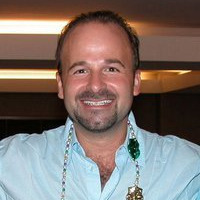
Bill, how many companies have you been involved with over the years— and, how long ago did you first start? I got my first exposure to network marketing 20 some years ago with a company called Amway. When I graduated college I was an engineering major, but I went to work for AT&T as an account executive.
Back when I was in high school my father took me to an Amway meeting and I honestly learned, for the first time, that you're not born into an economic level that you had to stay at for life, but that you had a choice.
My father was a Presbyterian minister.
When I went to this meeting and found out that anybody could become a millionaire, of course my first question was, "Then why isn't everyone a millionaire?"
The first motivational book I ever read was The Magic of Thinking Big by David Schwartz, and that was it! That was what brought me into this industry and business, this belief that you can become and do and be so much more.
I tried selling products to family and friends and I took a bit of grief. That was all right, it was part of the learning process, but I went on to continue my education. I finished high school and then on to college where I crammed four years into five and was the student body president and had some leadership roles. But I had a tough major, engineering, physics and mechanical engineering with a minor in business. So, I took the academic route.
I was not a straight A student by any means, I was a C student, but I tried to balance both social and academic along with interpersonal relationships— and getting to know multimillionaires. The student body president gets exposure to the board of trustees and I could see that just working a job doesn't really get you anywhere. You kind of have to be head of the company to really be successful.
I went out into the corporate world and did very well and after five years at AT&T I was making pretty good money for someone my age and enjoying a very nice lifestyle.
Then my father started talking to me about a guy who was in this company and had made 2-3 million dollars. He was referring to Jeff Roberti, who had been doing very well in NSA. I got hooked into going to meetings and what happened...
I was at a meeting and a guy stood up and said he had made $10,000 last month and— now this is purely ego— I looked at that guy and thought, "If that guy can make that kind of money then I'm going to be rich!"
Now, I admit this was purely ego; me thinking I was better than him. He didn't look that sharp, whatever, but I bought into the whole idea of taking control of your destiny. What ended up happening is I fell in love with the industry, I fell in love with working with people, I fell in love with seeing and meeting successful people and being exposed to the motivation and just living life on a higher plane.
Of course, when I went back and told my colleagues at AT&T, they laughed at me and scoffed at me. I remember, even my best friend at the time, I invited him and his wife to a meeting being presented by one of the top people and they walked out and were just kind of numb. They didn't say thanks for inviting us or anything and I thought, "Wow, how could you not get this?" But I didn't care. I stopped thinking about what others were thinking and focused on where I was going. One day I walked into my boss's boss and said, "I'm quitting" and he couldn't believe it. You should have seen the look on his face as his jaw hit the floor. Here I am, 27 years old, quitting to go sell water filters. He just couldn't comprehend that.
What proceeded for the next couple of years, with that company and then another, was just a tremendous amount of personal growth. A lot of frustrations, a lot of rejection, a lot of things that didn't happen the way I wanted them to. I burned through all of my savings, and then some. I made some money, but spent more than I made.
I was in the hole, but I enjoyed the process of learning and growing so much I knew, one day, if I stuck with it, it would pay off.
One of your downline partners recommended a title for this interview with you, 'How I became the poster child of network marketing failure to success' Yes, that would definitely be me! There are so many things that I look back on that I did. They were just part of the process but, you know… if anybody was going to come in and fail I think I could take it to a new form. You have to understand, I'm very aggressive and very left-brained and I epitomize the type A personality, but at the beginning I wasn't very teachable— or I just didn't have the people around to teach me.
So, everything that you could possibly think of doing, I probably did and then some; everything from putting flyers on cars and hanging things on doorknobs to ads of all sorts. I ran ads in a paper for a seminar and had nobody show up. I just did things my own way. I didn't ask questions or follow the people who had been successful; I was trying to reinvent the wheel.
When I got involved in InnerLight, I didn't pick the company, the company picked me, because of a series of events that had happened in my life. My wife and I had just moved down to Florida and we were burning through our savings pretty quickly. I was trying to get a personal coaching and seminar business off the ground, but here in south Florida they're not really concerned with personal growth on a very large level, so when I got involved with InnerLight failure was not an option.
Everything I had ever gone through, good, bad or otherwise just became crystal clear and very focused. I knew at this point it wasn't a matter of begging, pleading, convincing or persuading. I tried that before and it hadn't worked.
I knew that this was about finding the right people, people that wanted to be healthy and people that were looking for an opportunity to change their lives economically.
So, I didn't waste my time doing all of the things I used to do.
It just evolved into a two question kind of thing, number one: Is health important to you? And number two: On a scale of one to 10, how important is it? If people didn't come back with an eight, nine or 10 I basically told them they weren't qualified.
What I did was come from a position of strength; believing in the product, believing in the company, believing in the science and what I had....
It wasn't up to me to convince you. It was up to you to be smart enough to realize that somebody was knocking on your door with a gold brick.
Were you smart enough to accept this gift and do something with it or were you too ignorant to not even see it, which allows me to just move on to the next person.
I've spent a lot of time in this industry, I've been with four different companies and the more companies I was involved in the more success I had, but nothing on a massive scale like I've achieved with InnerLight.
I think it's just because the timing has to be right in one's own life, for both the product and the why.
So yes, I did go from poster child for failure. I don't think my stubbornness is overly duplicatable, but I have met enough people in this industry making a million dollars a year and I didn't see enough of a difference between them and me— other than maybe time and knowledge. I just kept saying, "If they can do it why can't I? There's nothing to stop me!" and I always held that belief.
I did go back into corporate America after a few network marketing companies and I wasn't looking for a new network marketing company when we moved to Florida. That was the last thing on my mind, but I'm so glad I got back into it because it's what has made my dreams come true.
What got you back? You said the company found you, how did they find you? Well, what happened was that my wife had been to an Anthony Robbins seminar, and she had ordered a couple of audio tapes including an interview with a gentleman named Dr. Young. In the process, we listened to the tapes and were pretty much blown away by the information in there because it made so much sense.
I had lost my mother a few months earlier from complications with MS and my father had died of a massive heart attack about eight years earlier. These were painful experiences in my life that told me that you can't take your health for granted. I listened to these tapes and was pretty amazed and then I got this email informing me that the man we had been listening to was going to be at the Biltmore Hotel in Coral Gables, Florida the next week.
As fate would have it, I went there and met Dr. Young and his wife, listened to the information that he had and we were, basically, blown away. Now, I wasn't interested in doing this as a network marketing company, I didn't even know that's what it was. What happened was we got on the product and after just three weeks I experienced dramatic changes in my health.
I thought this was incredible and then I met a gentleman named Mike Foran, who was from Sarasota. When I saw him I said, "Hey Mike, I knew you from Jeff Roberti a few years ago", Mike was Jeff's right hand man and he was handing me his card and it turned out he was now with InnerLight. Another coincidence?
A few weeks later, Mike was out in Utah and he called me up and said, "I think you need to come out here and check this thing out first hand."
So, my wife and I got on a flight, with very little savings left, and we got out there, went into the conference room and I asked the president to give me a list of people signed up as distributors and I decided to call them up and interview them.
Well, 80 percent of the people I talked with gave such positive results— not just comments that they feel better, but incredible positive results about what the product had done for them, how they were off prescription medications... it was really something. What I saw there was a company that didn't even realize what it had. In other words, this was a diamond in the rough. Nobody even really understood what existed here, but having been involved with several companies already and having used different products myself and then hearing people's results from the InnerLight products I said, "We've got something here!" At that point, along with another gentleman that Mike brought in to the company, we started trying to change it into a network marketing model of distribution. That was a tough battle until the company got bought publicly by the Quigley Corporation, and they were actually able to bring in some higher level corporate type people who knew how to run a network marketing company.
So, how was it starting out for you with InnerLight? It was back against the wall. I'd work something like six 16 hour days each week. Thank goodness that in the year 2000 long distance was inexpensive, because if it had been back in the 80's or early 90's the long distance bills alone would have prohibited me from doing this business. I was just racking up thousands upon thousands of minutes on the phone.
I was spending time on the phone, spending time every day sending things out and visiting the post office, but I was also keeping track of people that I dealt with.
I was using technology, I was using my laptop and Outlook to manage my people, so when I talked to them again I knew how many kids they had and what their issues were. I wasn't trying to memorize these things but used a systematic approach.
I carried and used my product wherever I went and when people asked me about it, again, I'd try to qualify them by asking my two questions and if they qualified they got a CD or cassette tape and I'd follow up with them in a day or two.
I started doing some presentations in health food stores and that really helped build the business down here in south Florida.
What were the presentations in stores like? They were fun because I had learned so much about the health industry. It was like helping people wake up and realize that they could be proactive about their health. The whole idea and concept in western medicine and health is very misleading. We spend a trillion dollars on 'health care' but it really should be labeled 'sick care', because the statistics are that one out of three get cancer and one out of two get heart disease, so if we're the wealthiest nation in the world, we're not doing very well. Because it's known that in the previous century, the 19th century, one of a thousand got cancer and now it is one out of three so we're moving in the wrong direction.
What was interesting was, first of all, people that shop at health food stores already have a propensity for health, so many of them were open to this. When we were talking about the subject of alkalizing the body, everything about it made logical sense, but it just wasn't really well known.
So, in giving these seminars to people they were very, very open. I wasn't selling the product, I was just sharing information.
You see, I knew that if I just go and try to sell product then I'm just doing what I've always done. If I could show people where their health is, why it's where it is and the choices they can make, then they are going to ask questions. It's a paradigm shift, because now people are coming after me asking what they can do. That's far more powerful than taking a product and trying to shove it down their throat, it's a matter of creating the situation where they come to you. And since I'm drinking the product in front of them and deflecting their questions to the very end, it just builds up their curiosity. So it was fun! A lot of people got educated, a good percentage of them tried the product, many of them benefited tremendously and it just reaffirmed for me the value of the product.
Also, John, it reinforced for me that this is not an opportunity driven company. I realized throughout this whole process that it was never money that really motivated me in my life.
Yes, I want to be wealthy and have abundance, but I realized that for me it was the passion around educating people about something that was as important as health.
Having lost two family members that meant the world to me, and being able to educate and maybe help others avoid that kind of pain was one of my major whys for doing this business. The money was kind of the by- product or side effect of exposing and teaching and enabling people to find an alternative way to becoming healthy.
You said that you ask those two questions and I'm wondering if you ask people if they might be looking for an opportunity. I don't, John. I look at it this way, if health is not that important to you then really, two things; number one, you're not going to be good for this as a business because I believe if you're going to be successful with any product you sell you need to be into it. So, if you're not health oriented you are not someone I would really want to talk to about the business. Second, if you're not health oriented you're probably not somebody I would have much in common with, because that's really important to me. I'm looking for people that want to be balanced in their life. Without health, being a millionaire means nothing.
So, for me the two questions I ask are just about qualifying people I want to be around.
I knew that if you were a satisfied customer you were probably more likely to directly or indirectly share this product with other people just because of what it did for you.
I choose to focus on the product and as they say, the cream rises to the top. When I found those that wanted to do more than take the product, that's when I went into full court press and started working with and developing people— and of course, even from there the cream rises further and then it's about building and developing leaders in the business.
So tell me how you do that. How do you develop leaders? One of the first things is I look for clues.
Here's a clue to me that somebody wants to be a leader; they're constantly calling me or emailing me and bugging me with all sorts of questions.
That tells me there's something behind that person. They want to know and they want to learn.
So, then I ask them if I have permission to work with them. The reason I ask that is that in the beginning, I didn't ask that and I'm very direct and strong with people and some people mistook that as being rude and demeaning, which was not at all my intention.
Some people are more equipped to handle feedback and want it and some are a little bit more thin skinned and I found that I really have to ask permission. So, I ask, "Do you want to become successful in this as a business? Do you want to grow personally? Do you want to become affluent and have abundance in your life? Are you willing to let me work with you and if so do you accept that I'm going to be direct and strong?" Then, the first thing I do is take other people's information, people who have already become multi-millionaires in this industry, and I forward that information to them and have them read it. I'm not a genius here. I didn't invent any of this. I found information from experts out there and I'm not trying to reinvent the wheel, I take from the people that are out there and share the information. I assimilate and put a lot of it together, but I basically start sending emails out to people.
[See the ATTACHMENT at the end of this story for an example of what Bill sends out. This one, NETWORK MARKETING: SECRETS OF THE EXPERTS is a 72 page Word.doc consisting mostly of material by Doug Firebaugh, and used with permission.] One of my favorite books that I recommend is, If You Lead They Will Follow, by Patrick Higgins. It's a book that's very direct, very simple, but I think very powerful. What that book does is help a potential leader identify where they are really at and what it will take to lead people.
I explain that we are always going to find followers. That's just the way of life, but if you want to be successful in network marketing you must develop leaders, you must bring out the best in your leaders.
That's what I try to do for myself, bring out the best I find in people. That's one of the very few things I think I'm good at, finding the best in people.
Sometimes it's a smooth experience, sometimes there are some rocks and pebbles on the road, and sometimes there are some bumps and bruises, but when I work with people and they know I have their best interests at heart, then it actually works a whole lot better. That's why I go back to asking permission.
It's a matter at that point of helping people set expectations. Giving them an opportunity to be on some of our conference calls and leading small groups of people, encouraging them to start doing their own presentations, whatever the case may be.
It's a matter of encouraging them to step outside their comfort zone and get comfortable. Even if they feel uncomfortable for a time.
That's the best part. If you can live outside your comfort zone even just a little every single day for a year, you will grow in ways that people who can't do that won't be able to comprehend.
You will look back and hardly be able to believe where you are and where you've been.
It's in that discomfort that we learn the most. I basically encourage and support people. When they need a kick I give a kick, when they need a hand I lend a hand, praising what they are doing that's working and challenging them when they aren't moving. It's just a process and I find that there are really very few people willing to pay the price to be leaders.
Do you have anything like a success philosophy that you live and work by, Bill? My god, a success philosophy... there are so many things. Like, the harder I work the luckier I get. I would say that one thing I've really had to work on the last few years as the abundance and success have come, I've had to work at actually slowing my life down.
I know for some people they would think the opposite would be true, but because I spent so many years working so hard and not seeming to get anywhere, I wanted to stop and smell the roses. I wanted to stop and appreciate what having a substantial six-figure income on a residual basis can do in one's life.
Because if I just say, "Okay, I made this amount and now I'm going to go out and double it", then all I'm focused on is the money and chasing it and when is enough, enough? I mean if I never made another dime I'd be a very happy man.
I have a lot of goals and things I want to achieve, but I would say one of the first things that I live by is an attitude of gratitude.
I know this is a phrase we hear often, but it really is valuable, it's to be grateful every day for the lifestyle that I have, understanding it's not here by luck. I worked very hard to get here and there was nothing lucky about it. I paid a price and I think there is always a price to be paid with any kind of success you're going for and it's worth it.
So, part of my success mantra is being grateful for those things that I've achieved and being sincere in wanting to help change the world. At the same time, being responsible and becoming astute in a business sense, because you can't just want to change the world and hold hands while singing Kumbaya, that's not going to work. You've got to still bring business into it and you have to treat it like a business, you have to treat people in a professional, ethical, honest and straightforward way.
One of the reasons I believe I've been so successful is because I'm one of those people who is directly honest with people and I tell people what they need to hear not what they want to hear.
In other words, I wasn't in this for a popularity contest, you can never win those anyway. People are going to either like you or not.
I don't think I can really sum it up in a sentence, but I say a success creed to me is not just about working hard and working smart, you've got to have a passion for why you get up and why you do the things you do. There has to be good stuff that you put out into the world and you can't expect to be directly compensated by it. I believe the laws of the Universe work in a magnificent and splendid way and most of us end up fighting those laws rather than working with them. That took me a long time to realize.
I would say being grateful for that which I have and being able to enjoy it and embrace it are important; and to live it, thereby giving others permission to do the same thing. In other words, changing my status economically over the last six years, hasn't changed who I am today in the sense that I'm still a down to earth, straightforward person. No matter what kind of car I drive or what kind of home I live in or what the size of my bank account I'm still that guy. I don't know if this really answers your question.
It does, beautifully. Bill, what's the best thing about network marketing for you? Ahhhh… it's the freedom. The freedom to choose when I get up in the morning. I remember going to a big Amway convention back in the late 70's. At the time they had a gentleman who was a young executive who worked for Motorola. Very successful in Amway, very well known and he said to this group of 5000 or so,
"Most of you people, you get up and you're tired in the morning. Yeah, I get up too, when I'm tired. When I'm tired of sleeping!"
I thought that was the coolest thing in the world!
I tell people that even today. I get up when I want. I do what I want on a daily basis and go where I want. If I want to go for a motorcycle ride, I go for a motorcycle ride. If my wife and I want to go see a movie in the afternoon we can do that. The funny thing is, when I do get up I usually go into my office and spend a couple of hours on my computer, sending out emails and returning phone calls, things like that. Whatever I do and wherever I go I can do the business at any given time and place.
It's the freedom of choice; to be able to do things because I choose to not because I have to.
I do live a very disciplined life. I want to continue building my business and supporting my distributors. I have a standing rule that you can call me 24 hours a day and if I'm in my office at two in the morning and you call me there, great, we connect. If not then just leave a message and I'll call you back. I usually return all phone calls within 12 hours. But it's the choice, the freedom of choice that's a fantastic thing. I think everyone should have it and I recommend it highly!
Bill and his wife, Monica, live in Miramar, Florida where Bill has grown his organization with InnerLight to something over 30,000 people in his 51/2 year involvement, earning him the distinction of being the number two distributor in the company.
COACHING | LEADERSHIP | PARTNERSHIP | MOTIVATION | PROSPECTING | PSYCHOLOGY | RECRUITING | TRAINING | SKILLS Network marketing: secrets of the experts The information contained in this document is a compilation of some of the most powerful strategies, and killer secrets for becoming successful in network marketing. Use at your own risk! This is the best of the best. compiled by Bill Holderby a 72 page downloadable Word.doc Note: The majority of this information came from an extensive amount of work by Doug Firebaugh. His website is MLMLeadership.com.
KILLER Data Bullets for Your Recruiting Arsenal — page 3 The Business Research KILLER Prospecting Tactic — page 5 Recruiting & Prospecting Part 1 — page 7 Recruiting & Prospecting Part 2 — page 10 The 10 Commandments of Recruiting — page 14 Overcoming Fear — page 17 Are You Recruiting the Wrong People? — page 19 MLM Recruiting Failure: The 5 Biggest Reasons — page 21 7 Key Traits to Best Potential Distributors — page 25 The 7 Laws of OnFire NetWorking — page 28 Recruiting Beyond the Business — page 32 The 5 Magic Words in Cold Market Prospecting — page 34 5 KILLER Opening Phrases for Cold Market Prospecting — page 37 The MLM Recruiting Myth in Network Marketing — page 39 The 5 C's Million $ Earners Have — page 41 7 Brutal Truths about Network Marketing — page 43 What It Really Takes to Succeed In Network Marketing — page 47 The 5 Levels of Seriousness in MLM — page 49 How Attractive Are YOU as a Potential Business Partner? — page 52 Leading & Empowering the 5 Types of Downline Distributors — page 55 The Single Biggest Mistake that MLM Leaders let Distributors Make — page 59 The 5 Levels of MLM Leadership Vision — page 61 The Secret to Igniting Passion in Your MLM Leaders — page 64 The Two Golden Words of MLM Leadership — page 67 Who is Sharpening Your Cutting Edge in Network Marketing? — page 69
The readable text follows the preserved original publication. The original PDF remains available alongside it.