article · October 2021
How Veery Perceptive of You
Your perceptions, their reality—Another recipe for win-win team building © Russ McNeil 2021 AhaUniversity.com


How Veery Perceptive of You
Your perceptions, their reality—Another recipe for win-win team building © Russ McNeil 2021 AhaUniversity.com
For as long as I can remember, I’ve been fascinated with maps; street maps, state maps, atlases; even today, I can lose myself in the study of a detailed map. Isn’t that ironic? Getting “lost” in a tool whose purpose is to “show the way.” Why is that? I do believe Allen Carroll has the answer: “ stimulate both sides of our brain: the right side which is intuitive and aesthetic, and the left side which is rational and analytical.” 1 Yep. Maps provide a magnificent combination of both.
Perhaps you share my fascination with colorful cartography, perhaps you do not. Either way, there is one fact upon which we can agree. Maps highlight some things we can never see in person, things like international boundaries. Oh, sure, walls, gates, and road signs are visible, but go out into a remote area and try to find a dotted line on the ground. On a map, however, the line is right there in front of you, a dotted line separating country X from country Y. Take, for instance, the border between the United States and Canada. Much of it is rough terrain covered in hardwood forests. Sprinkle in some rivers and lakes and you have the ideal breeding habitat for a certain species of songbird.
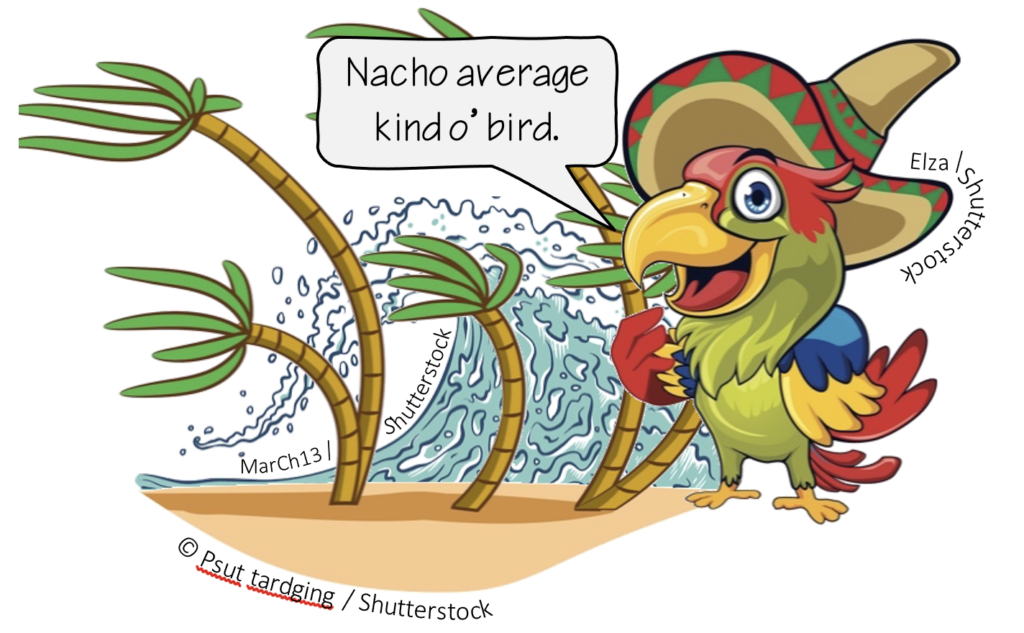
By normal standards, the Veery is your run-of-the-mill, average bird. With brown and white coloration, its appearance is unremarkable. The Veery does have a pleasant vocalization of veer-veer, veer-veer from which the bird gets its name, but it isn’t a melody worthy of special mention. 2 Moreover, the Veery preys on insects during breeding season and berries during late summer and fall, so its diet is unremarkable as well. 3 Like I said, in all normal respects, it’s your basic everyday songbird.
Veeries breed along the invisible U.S.-Canadian border. By the time May and June come around, breeding is complete. Nevertheless, their work is far from over. 4 That’s because they migrate to South America for the winter. 4 This winter migration has them crossing the Gulf of Mexico and the Caribbean Sea in September and October. 4 Guess what else takes place during this time—peak hurricane season!
As you might imagine, songbirds don’t fare too well in hurricanes. Wind and rain aren’t necessarily a problem. Many Veeries even survive mild tropical storms. Severe hurricanes, on the other hand, can decimate a flock. The Veeries, of course, prefer to avoid such a fate. This is where Veeries cease to be average. The best way to explain the special nature of the birds is to use an analogy:
Let’s say you get to your job by driving in your car. Let’s say, also, your daily commute is 100 miles in each direction. If you don’t leave by a certain time in the morning, you’ll be late for work. With such a long commute, unexpected events can cause unwelcome delays, which means getting to work late. Now, imagine one day you get this funny feeling that two weeks from now, a severe thunderstorm is going to come through. Oh great, you think. The traffic that day is going to be brutal. Traffic is always a pain in bad weather. I’ll have to leave even earlier that day to get to work on time.
With this analogy in mind, let’s consider the case of the Veery. The months of August through October are the peak time for southbound songbird migration. 4 These happen to be the same months of hurricane season peaks in the Atlantic basin. 4 History indicates, “since 1950, 84% of all hurricanes and 93% of all major hurricanes in the Atlantic basin” have formed in during this three-month period. 4 Not good for the Veeries whose migration path takes them through the basin at the most dangerous time of the year.
Veery migrations to Brazil represent distances of 4,000 to 5,000 miles. If the birds arrive late to their destination, they face the risk of having to nest in less desirable habitats. 4, 5 To ensure they have plenty of time to make the long trek to South America they begin the journey in summer.
For Veeries, the big unknown is the weather. A severe hurricane can blow them dangerously off course (or worse). 4 The birds need to avoid severe hurricane weather. But what happens if the upcoming hurricane season turns out to be a particularly severe one? Are the birds destined to fly blindly into harm’s way, to near-certain demise? It’s not like they can tell ahead of time. Or can they?
Apparently, Veeries can sense when an upcoming hurricane season is going to be especially severe. In years with more severe hurricane seasons, the Veeries adjust their migration schedules. 4 Somehow, the feathered forecasters perceive months in advance when a severe hurricane season is in the works. 4 In these years, Veeries quit breeding early and head south ahead of schedule. 4 This extra time allows them to either wait out a severe storm or navigate around it without jeopardizing a timely arrival in South America. 4
Christopher Heckscher tracked Veery migration schedules from 1998 to 2016. He then correlated the data with hurricane activity for the corresponding years. What he found is nothing short of astonishing. Veery hurricane predictions are more accurate than the predictions published by NOAA meteorologists! 4 (NOAA = National Oceanographic and Atmospheric Administration).
And that is what makes the Veery so very special. By normal standards, the bird is ordinary, but when you come to recognize their remarkable ability to predict hurricanes, you realize they aren’t ordinary at all. They are, in fact, quite extraordinary.
Veeries provide a magnificent illustration for the networking profession. Within this illustration is a powerful message. For some, it’s nothing short of profound; even life-changing.
Her name is Lisa. I meet her for the first time at a traditional business networking lunch. She’s there promoting the company for which she works, a debt reduction service. Lisa and I hit off from the get-go.
Along the way, I find out she is also building a part-time business of her own. She consults with people regarding flower extracts (basically essential oils sourced from various flowers). She seems to have an extract for every need (stress, headaches, etc.). Her level of knowledge is impressive. She has a keen passion for what she does, something I appreciate immensely.
One day, Lisa explains that the company which formulates her extracts offers a certification. In other words, she can, if she so chooses, become a certified practitioner of flower extracts. I can tell she would love to be certified, and yet something is holding her back. From my perspective, it’s a no-brainer. Clearly, she has a head start on the knowledge. Furthermore, her passion for the subject is off the charts. Of course, she should go for it. And that’s precisely what I tell her. I encourage her to apply for certification, and I explain my reasoning.
The next time I see Lisa, she’s a bona fide certified flower extract consultant. She thanks me profusely for encouraging her. That experience is a watershed moment in her life. Today, years later, she no longer practices her expertise in extracts. Nevertheless, the experience of stepping out of her comfort zone and reaching for a dream sets her life on an entirely new trajectory, one that continues to bless her today.
All this takes place at a time when I’m actively building my network team. Lisa is exactly the kind of person I look to sponsor. But—and a big but it is—her passion lies elsewhere. Lisa knows I represent a significant opportunity. She can ask for it any time she wants. We both know this, and there’s no need to discuss it. The best thing I can do for Lisa is to express my belief in her, to encourage her with words of life.
People will forget what you said, people will forget what you did, but people will never forget how you made them feel. —Maya Angelou
The networking profession is unique in a multitude of ways. We are not in a product business. We are in a people business. Everything we do in our profession involves interacting with other people. It may start with prospecting, but it most assuredly does not end there. When you sponsor a person, you are agreeing to invest in them to the point where they can duplicate the behaviors of the person who sponsors them.
This investment you make in team members comes in several forms. Some are obvious and some are not so obvious. One of the not-so-obvious ways we invest in people is when we encourage them to pursue their full potential.
Helping people in this manner is a mark of true leadership. It requires us to invest deliberate effort, to listen, and to exercise awareness. And therein lies the rub. Life in our times is hectic; even more so when you’re building a business. Dr. Rick Hanson describes it like this: “Many interactions these days have a kind of bumper-car quality to them. At work, at home, on the telephone, via email: We sort of bounce off each other while we exchange information, smile or frown, and move on.” 6
Do we ever slow down to genuinely consider the people with whom we interact? To recognize their valuable qualities? And even when we do take notice, do we bother pointing out their qualities? Sadly, we are more prone to call attention to negatives than we are to call out positives. When we fail to focus on a person’s positive attributes, we miss an opportunity to grow our business.
Why it matters
Nearly everything we do in the networking profession boils down to a single underlying goal: to build an army of volunteers. By treating team members with positivity—through pointing out their strengths and talents—you bolster their attraction to the business.
People tend to rise or fall to meet our expectations. This powerful truth is known as “The Pygmalion Effect.” The things your team members accomplish, the things they do, and how they perceive their own abilities are influenced by your expectations. The simple fact is that when you expect more, your team members tend to achieve more. And isn’t that, after all, the point of our profession?
If we don’t take into account the ramifications of our expectations, we may miss out on the dramatic benefits of holding high standards. —Shane Parrish
What encouragement is not
One of the greatest gifts you can give a team member is the gift of helping them to recognize and utilize their God-given potential. Don’t squander the gift in a half-hearted attempt. And for heaven’s sake, don’t be superficial about it. Keep in mind the GIFT OF ENCOURAGEMENT is . . .
• … not merely hoping for their success. The GIFT OF ENCOURAGEMENT involves truly believing they possess the talents and abilities to succeed in our profession. • … not about flattery. Empty, insincere words aren’t going to cut it. Insincerity, in fact, can backfire and be counterproductive. • … not about rah-rah. Running around high-fiving everyone telling them how great they are, is superficial and shallow. No one takes it seriously and no one benefits from it. • … not about continuous correction. If all you do is point out flaws and mistakes, you come across as negative. Furthermore, you run the risk of discouraging the other person rather than encouraging them.
How to recognize potential in others
A person really will rise (or fall) proportionally with the level of expectation they sense in you.
The crucial ingredient in this process is not a person’s natural ability as much as it is your belief in their ability. The first step then is to gain insight into what their abilities are. To that end, leadership coach, Nicole Pallai, suggests asking one or more of the following questions:7
• What are their values? Values indicate a person’s priorities in life, the guiding principles that dictate their decisions and actions. • What are the defining experiences of their life story? A person’s life story provides insight into how and why their beliefs have been formed and nurtured. • What are their deepest aspirations? Knowing a person’s goals and dreams gives you tremendous insight into their true motivation.
Our profession brings with it a continuous stream of new people. As your team grows, people you don’t know show up in your downline. Call and introduce yourself. Offer to help. Integrate one or more of the above questions into the conversation. This demonstrates genuine interest and gives you a valuable foundation upon which to develop your belief.
How to encourage others to reach their potential
All this talk about encouragement and potential sounds good, but the question remains: how do we go about it? What are some things you can do to encourage others to realize their potential? Here are some practical suggestions.
Become fluent in the FIVE LOVE LANGUAGES. Don’t be thrown off by the name.
Encouragement, communicating potential, and imparting vision are matters of the heart. The LOVE LANGUAGES supercharge your communication in these matters. For more information on the FIVE LOVE LANGUAGES, check out the article, “Pup Speak,” which is posted here, or, snag a downloadable PDF form here.
Use yourself as an example. Recount experiences from your own journey. When you share personal experiences—particularly struggles you’ve endured—you become more relatable. Point out mistakes you’ve made and what you did to overcome them. Team members need to know that it’s okay to mess up, and in fact, mistakes often provide steppingstones to new levels of accomplishments.
Place a hand on their back (figuratively, of course). Let them know you’re there to support and assist. Ask whether they want you to lend a helping hand. When they say YES, tell them “One of the ways I can help is by resting my hand on your back. I’ll never push you, but that way I can guide you along the path to your goals. How’s that sound?”
Your guidance will inevitably lead them out of their comfort zone, as it should. If you sense resistance, simply remind them of your conversation and the necessity of expanding their comfort zone. Clearly, they aren’t obligated to proceed, however, depending on the individual, this approach can be highly effective. The key here is to know when to nudge and when to back off. When in doubt, ask. Open communication preserves relationships.
Personal development, personal development, personal development. In the networking profession, personal development is not optional, not if you want to achieve any significant success. Personal development multiplies a person’s effectiveness. When you promote PD, you are, in a very real sense, encouraging team members to maximize their potential.
The primary rule of promoting personal development: do it yourself. You can’t very promote it if you aren’t participating. First of all, you wouldn’t know what information to recommend. Second, you destroy your credibility with the team. Third, the growth of your team is further stymied because you don’t personally have the personal development from which to draw. Make specific recommendations. When you discover a team member struggling with a particular challenge, recommend a resource that addresses their specific challenge. This page contains a link to download a list of my personal favorites.
Encourage explicitly. Some people are rarely told things as simple as “You can do this.” Sometimes, a little bit of encouragement is all it takes to keep a person in the game. Remind them of their past victories. Whatever you say, make sure it’s 100% sincere.
Acknowledge their victories, even small ones. Look for opportunities to praise. Don’t wait for them to achieve a new pin level. Acquiring a new customer, consistent attendance on webinars, stepping out of their comfort zone, reading a personal development book—these may seem small things to you, but they provide legitimate opportunities for you to acknowledge team members. When you notice a team member making positive changes in their life, affirm them.
• One powerful way to acknowledge a person is to tell them how they have encouraged you. Be specific, and as always, be sincere. • Compliment them in front of others. • When you introduce someone, include words of praise. • Send a hand-written card. Emails and texts give the impression you’re avoiding public praise, which contradicts your intent. Hand-written notes demonstrate a higher level of sincerity and make a profound impact on the recipient. • Share the most powerful 4 words in our profession: “I believe in you.”
Always remember…
When it comes to imparting belief to team members, the most important thing to remember is … to accept them where they currently are in their journey and to where they trying to go. You’re in a position to help them navigate, and you have the responsibility to encourage and assist them. However, it is their journey, not yours. You cannot want it more than they want it for themselves. And you most assuredly cannot want a journey for anyone who loses their drive to make the trip.
Wrap-up
Veeries are special little critters. They know all about the value of keen perception. They’re 4,000 miles away from the Atlantic basin, so they can’t possibly “see” the upcoming hurricane season, but what they can’t see, they are able to perceive with perfect clarity. And when necessary, they take corrective action. Other birds don’t share Veery’s level of perception. On this point, the Veery stands alone.
Wise leaders take a cue from the Veery. Wise leaders understand how people succeed or fail largely upon the expectations of the people around them. But words are cheap. “I expect you to do such and such,” is not only lame, it's condescending. The right way to express your expectations is to demonstrate belief. And the best way to do that is to (1) slow down enough to “perceive” the strengths & qualities of others, and (2) encourage them by sharing with them the things you notice.
When you encourage a team member in this manner, they realize you believe in them as an individual; they pick up on the expectations you have for their success; they experience a boost in their sense of self-worth. In short, your encouragement gives them permission to overcome challenges and to succeed.
Some of us find maps interesting, even fascinating. Interesting or not, maps have their place. Sometimes, maps present information we can’t see in the real world, international boundaries, for instance. Belief is much the same way. You can’t see it, but when you experience it, you realize all too well how real it is. The key is how to convey belief. How does one convey belief in another person? By sharing perceptions; that’s how.
It all starts with your perception.
Are you skeptical? Don’t take my word for it. Try it for yourself. Go ahead, you can do it.
I believe in you. Veery, veery much.
–RM
Note: For more results-getting human connection strategies, and how to use them to grow your business, check out The Critter Lessons Series.
Regarding the distribution of this article: You may freely distribute and/or post this article provided the following conditions are met: • it has not been modified in any way • title, references, bio, and this notice must be included • you realize no commercial gain from its distribution (including, but not limited to, affiliate programs or inclusion in other for-sale products) • you neither claim nor imply rights to any of the content herein.
References
- Carroll, A. Why Are Maps So Interesting? Esri.com. https://www.esri.com/arcgis-blog/products/story-maps/uncategorized/why-are-maps-so-interesting (2019).
- Cornell Lab, The (editors). Veery: Overview. AllAboutBirds.org. https://www.allaboutbirds.org/guide/Veery/overview (n.d.).
- Cornell Lab, The (editors). Veery: Life history. AllAboutBirds.org. https://www.allaboutbirds.org/guide/Veery/lifehistory (n.d.).
- Heckscher, C. A Nearctic-Neotropical Migratory Songbird’s Nesting Phenology and Clutch Size are Predictors of Accumulated Cyclone Energy. Nature 8, 9899 (2018).
- Sherry, T. & Holmes, R. Winter Habitat Quality, Population Limitation, and Conservation of Neotropical-Nearctic Migrant Birds. Ecology 77, 36-48 (1996).
- Hanson, R. See the Good in Others. PsychologyToday.com. https://www.psychologytoday.com/us/blog/your-wise-brain/201205/see-the-good-in-others (2012).
- Pallai, N. 3 Steps to Seeing the Worth and Potential in your People InnerWill.com. https://innerwill.org/3-steps-to-seeing-the-worth-and-potential-in-your-people (2015).