feature · November 2005
Litmus Test for an MLM Guru
I've been helping all these people make a lot of money, and I mean a lot of money and I wasn't getting any residual. If you know me that's like a crime against nature!
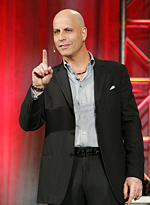
DUPLICATING | MARKETING I NETWORKING | TRAINING | SKILLS Litmus test for an MLM guru You've seen him on stage, listened to his audios, read his books and articles... ever wonder how he'd do if he was back in the trenches actually doing the business? You're about to find out. Randy's back, building again, aiming for a six-figure a month income, and, he's "going crazy with it!" a conversation with Randy Gage plus AUDIO 5591 words | 17 page(s)
So how many times have you retired, Randy? Well truthfully, once of my own volition and once without my own desire. When I was 40 I had my mid-life crises right on schedule and said I was going to drink out of a coconut, race cars and play softball and that was it. That lasted nine months and I was crazy and felt like I had to get back doing something.
Then the second time was when I retired from network marketing but it wasn't because I wanted to— truth be told, the company I was working went out of business so I just said, 'well, this is the second time I've been with a startup, second time it went out of business, I don't want to go through this anymore!'.
I was kind of burnt out and gun shy so I did my consulting thing and my seminar and other projects but I retired as a distributor at that point.
So what possessed you to come back and do it again? Well, in the last five years I bet I have made more MLM millionaires and multi-millionaires than anybody on the planet. Now I don't say that as hype or 'rah rah', I mean you can send Mike Wallace and the 60 Minutes camera crew out here and let's go through my files. I can show you company after company after company of the top, #one in the world, two, three in the world, top 10 payouts in the world of eight or 10 companies where the top leaders will say, "well yeah, we use Randy's system, you join our group, you buy his book, you get his Duplication Nation, we use his system." And so...
I've been helping all these people make a lot of money, and I mean a lot of money and I wasn't getting any residual. If you know me that's like a crime against nature!
So really, the last two years of that time I was going crazy looking for a program to build personally, and just spent the time shopping around to find the one that I could build.
What criteria does the one you selected meet for you, especially that the others didn't? Okay, 1. Top of the list— they've got to have good people at the top. Because if there are good people, if there's a problem anywhere, whether it's the comp plan or whatever, if there are good people at the top they have that in mind.
Now… I did find a number of companies with good people at the top.
The next criterion is the product. It has to be a product that I would use myself, personally. Some of the companies failed on that. Some of the products made me sick or I was allergic to them, that kind of thing. Or I felt the product didn't have legs in the marketplace. In particular, there's a real problem in the industry with this incestuous 'me too' product issues. I mean if somebody gets a sizzle product, there soon are at least 15 knockoffs of it in the marketplace. That's just silly because the knockoff never meets or exceeds the market share of the original.
It's like those Russian eggs that I know you're familiar with John; each one has the smaller one inside, and the smaller one… that's how the knockoff products work.
So I didn't want a knockoff product I wanted a unique product and it had to be one with a 'sexy' product story that people understand.
They don't need 10 lab reports and 10 research studies and 10 DVDs from doctors or lawyers or whatever explaining the product. There has to be a concept that people get.
And again, I found some companies with good products and some that were just 'me too' or I didn't think the product had traction.
Then of course, I look for a compensation plan, one that's balanced. I don't want a 'heavy hitter' plan even thought I am a "heavy hitter", because I know if that's the case I'm going to make a lot of money initially but if I have tens of thousands of people who aren't making money I'm never going to be able to retire or ease up. I would always have to be churning and churning like being in a grinder and of course I don't want that.
So I look for a balanced plan where not only can I make a lot of money but I know that my people can make money, because that's where the real 'drink out of the coconut' money is, in what I call a legacy position.
I look for what is called a legacy position. Every major company that has made it long term and has made it big, they have distributors who have legacy positions. By that I mean if a bus ran them over next week, that distributorship would continue to throw off residual income forever, every month, because there is so much volume there, there are so many leaders under them that are already trained, they are into a daily, monthly, weekly method of operation that it's going to continue to churn the money.
To earn one of those positions you have to get in one of the fairly early stages of a company. You have to have a system that duplicates. You've got to have a comp plan that rewards people so that if you can get three, five, seven key leaders who are making more money with you than they've ever made in their life, it wouldn't matter if you said you were going to quit tomorrow. They'll say, "You go ahead and quit. I'm not going anywhere. This is the most money I've ever made in my life!" and when you get that kind of response, that's the true legacy position, that's the 'drink out of the coconut' money.
So, those are the kind of factors I seek. And of course a big one is, if you're going to do a company early on, which is obviously what I was looking for because I want a legacy position, you have to make sure that they really have the money in the bank— that they really are well-funded and can withstand the bumps in the road. And everyone is going to have bumps in the road so you have to have enough money to see yourselves through that.
Cool! How's it going? It's Great! I guess August was my third partial month, my second full month, at the business and it's going amazing! I've got a great group going. A good selection of leaders who are breaking ranks like crazy. I believe we are the fastest growing distributorship in North America and we're doing really well with it.
Were there any surprises, Randy? Were there things that you didn't expect? Truthfully, I'm actually a little surprised, and it sounds stupid to say it, but I'm a little surprised at how fast I'm building. Because I guess what has happened is in the last five years I've learned about network marketing even more. Because I've been doing all this consulting, I've become a better copy writer; I've become a better speaker. I've become a better meeting organizer. I've become, and this is the big one, a better person.
And so in this situation I'm actually building 10 times faster than I've ever built any organization. I've got people making incomes 10 times faster than they've ever made working with me before. That surprised me. I knew that I could be good at this; I knew I had a track record and experience and I have to be honest, the company I chose is part of that. I think I do have a product that has a sexy story that I can work with; I do have a delicious compensation plan to work with so of course, I can't take all the credit. And of course Eric Worre is my sponsor; he's the most experienced, successful sponsor I've ever had in the business so I have to give some credit to him as well; so all of these factors have come together to give me surprising growth.
Also, I guess a mild surprise is just how credible the industry has become in those five years. The pyramid objection just doesn't even come up anymore. It's just not an issue for people. There is so much credibility today for the industry because we've been in Forbes Magazine and Fortune, Success, and I even saw a two page spread in USA Today a couple of weeks ago about the DSA.
There is just so much credibility in the industry today compared to back in the day when we had to be so aware of that in our presentation and now it's just not an issue.
Today everybody knows of it, they seem to respect it, they are intrigued by it so I'm attracting some really credible profess- ionals, educated, successful people. The legitimacy issue has just seemed to disappear.
What are the keys, Randy, you attribute this success to— are there three or four major factors that are having this time be so good and build so well for you? Well, number one is I'm in right at launch, even a few weeks before launch, with incredible funding, so you can say what you want and say there's just as good an opportunity five years into a company as the beginning but the truth is people are very seduced by getting in at the ground floor. So, if you can show you're a young, growth-oriented company with a lot of money in the bank then I think that's a very big driver of it.
The second point that comes to mind is the infrastructure. As you know from my books and my training I'm just a maniac about infrastructure, step by step by step duplicable systems, and so I've got that going and I set that up from day one. We've done regional trainings, we had a leadership summit, we do a leadership call once a week, we got a systematized 'Get Started' training, a leader checklist— we work so hard creating infrastructure so people who haven't had the success we have, who don't have the experience we have, can still get the kind of results we have. So the infrastructure is a big thing.
Then, of course, the third thing, and I've really pushed this just because of my own fascination, which has taken place over the last couple of years on technology. We've really been able to marry the warm market old school stuff with some new school stuff.
We're doing a lot with email. We're doing an email blast we're sending to people. To warm market people, this is not spam.
We're doing this two step email which drives people to a landing page and on the landing page we have a recorded sizzle call and we've also got some online presentations and some audio presentations so we're using technology to build the warm market faster.
We've also been doing some testing with lead generation with a great deal of success and I've got a couple of leaders who are spear-heading that drive who have done very well with that and we're just about to roll that out to the whole group. And then we're doing some other testing with an Internet tour site which is very exciting to me at this moment and that offers a lot of possibilities for faster growth in the future. We're close but not quite ready to roll that out to the whole group yet.
Tell me a little more about that Internet tour. I don't understand… tour of what? You create traffic to a site and instead of just having a bunch of words on a site we actually take them on a multimedia tour. They go through the first part and it's written and then there are some audios that pop up and some videos that pop up and if they like that they go to part two and so on. It's going to be about a five part tour that's very interactive and using this broadband technology that's very readily accessible to everybody. The bandwidth issues are virtually disappearing almost overnight and so we're just trying to capitalize on that and involve a lot more senses with people using this Internet stuff.
When you say tour… the tour is of what, Randy? It's a tour of the presentation of the company. In other words, there's a part on the products, there's a part on the company, there's a part on the compensation plan— we're just taking them on a virtual presentation.
What have you seen has changed since the last time you were in the field. You mentioned earlier that one of the things that has changed is the lack of the pyramid objection, the credibility of network marketing. One of the other things that has changed is the technology, the Internet. Are there any other things in terms of the 'doing' of the business? The only other thing is I'm much more aggressive in how I can scale things up big time. That's why the email, the major blast thing we're doing is important. We've set up a team website that has the 'get started' training on there, it has the core commitments we ask people to make on there; the leadership checklist with leaders is on there.
The idea is we look at everything and ask, 'How can it be automated? How can it be systematized?' and How can it be scaled up in big numbers?'
And 'scaled up' means…? Scaled up meaning I want to be able to sponsor 14 people in a week if I really want to rock with it. AND I want to be able to support those people with the training they need so that they're not orphans and not neglected so if I can scale up and systematize stuff through technology or through putting people together in groups then it allows me to ramp up the speed at which I can build and then it ramps up the speed at which my people can build.
Okay, so give me a look at that in terms of training. One of the things you said is that you want to be able to effectively train your people, so how are you doing that? For instance, a big part of my training has always been the Get Started training that you do with a new enrollee within forty-eight hours of their joining the business. That takes 90 minutes or two hours to do it right. We're now putting that all online so that a person can do that themselves, without me, so I could sponsor 14 people in a week without spending 28 hours training them the first week because they can spend their two hours online and then my time spent with them is helping them actively build.
Time spent doing three-way calls with them, doing private receptions at their house, doing hotel meetings that they are bringing people to, in other words we get them into recruiting traction a lot quicker and with a lot more people at a time.
You mentioned earlier that you were doing a mix of the old way of doing things and the new ways of doing things. What are the classics that you've trotted out again, because they just continue to work and work and work? THE classic, the very classic is to still have someone get out of the gate by holding a private business reception at their home. Meaning have their sponsor come in, they invite all their friends to their home to preview a new business and you do the meeting in their living room.
It's still the fastest way to get somebody out of the gate, because people can get 12 people to their house and nobody ever gets 12 people to a hotel opportunity meeting; it just doesn't happen, I mean I never see it. But I do see people get 8 or 10 or 12 people in their house when they do their first launch of the business. That was working in 1972 with Amway, it was working in 1984 with Nuskin and it's still working today and I think it will still be working twenty years from now.
People love technology. I love the possibilities of technology, but there's certain old-school warm market stuff that just flat out works, they are a great way to get started, they are very duplicable and launching stuff in your house is just the perfect example of that.
How do you structure that? How does that meeting go, starting with the invitation… what are you inviting people to do? We're letting them know it's a business opportunity; we're not getting into the 20 questions game and trying to get drilled with interrogation. We do let them know that we're bringing in an outside mentor that is going to do the presentation and reminding them to explain that they are brand new and can't really answer a lot of questions but it's something they are very excited about, they're committed 100 percent to it and they just want their friends to come check it out. We encourage new distributors to send the message:
'You don't have to buy anything, you don't have to sign anything but we really want you to come and see it, you don't have to join… just come and see what I'm doing. If you love me you'll be there!'
We encourage people to do this because if, for instance, I opened up a restaurant and had a grand opening, wouldn't everybody who loved me have to be there on opening night? Of course your mom would be there and you would tell her she's not going to pay and a supportive mom will say, "Now son, of course I'm going to pay! This is your new restaurant and you have to make money. You have all these employees to pay so here's my $8 for my corned beef sandwich.", or whatever it is… they'd have to be there. Well this is no different than if you opened a dry cleaner or restaurant or anything else! Your private business reception is your grand opening and if people love you, they need to be there.
Very cool. That delights me because I never got that whole... whenever it was, of 'do not... do not under any circumstances, talk to your warm market'. Where did that come from? It came from pandering to people who wouldn't join. They would say, "well, if I could talk to strangers I'd do it", so rather than just taking a stance of 'tough love' and telling people the truth, people like to tell them what they want to hear. So they'll think, "Well, I'll sign him up, get his enrollment money, make a little money on his first order…" but the truth is, people who are afraid to talk to their warm market aren't really going to do any better with their cold market, because they're not really sold on the whole thing to begin with so you're just wasting their time and money.
Randy, what have you found in this process is appealing most to people about the business today?
Well, I don't push for customers and I don't push for the small business model— and by the small business model I mean the people who like to play 'store'. You know, they may be a Shaklee distributor and they have their spare bedroom set up as the store and they hang up their shingle and people are coming in and out of the house all day buying two bottles of this or a bottle of that. I'm not really aggressively seeking those people;
I'm aggressively seeking leaders who want to build a large organization, learn leadership skills and build volume that way. That's very attractive to a lot of people, they're excited about that.
For most people it's a stretch and involves a lot of personal growth and learning some leadership skills and executive skills and they get very turned on by that.
You have— as much or more than anyone else in this business I know— thrown yourself into personal growth and development. What are the things you are focusing with on people most, now, in those areas? The time they devote to it has to be sacred and has to be at least 30 minutes a day. And it needs to be done in the morning before you leave the house, so that you get your consciousness vibrating at such a high level you're attracting people who are at that high level themselves.
I'm not micro-managing what they are doing, they could be reading The Richest Man in Babylon, As a Man Thinketh, they could be listening to Jim Rohn CD's, they could be watching a Tony Robbins DVD, and it really doesn’t matter. What I think matters is that they make that commitment to personal growth and take that time in the morning to create the kind of consciousness that really builds their group dramatically.
How do you get the 'buy in' to that? Are people just eager to climb onboard with that because you recommend it?
It sounds silly but the answer is yes. And I guess the truth of that is I'm modeling the behavior and they're seeing the results I'm getting. I don't test with my group, it's standard procedure that if I send something to my group it's because I'm doing it, and that's understood, so the kind of success I'm having, and I'm just skyrocketing up the ranks, my people are seeing that and seeing my results and saying, "okay, whatever it is he's doing is working so I'm going to go ahead and duplicate what he is doing." So I've got immediate buy in with most people that join me.
At the risk of being an embarrassment to us both, I just have to ask, how many people are you bringing in who are new to network marketing versus people who have known about it before or have known you before? Well, they've all known me before, but here's the fascinating dynamic of all this, because I guarantee you a lot of people reading this magazine are saying, "of course it's easy for Gage. He probably rolled over 20 thousand people from whatever last gig he did" and it's actually the complete opposite. I probably started with a bigger disadvantage than anybody in the business because for the last five years I've exclusively been a consultant to the industry. I've done network marketing trainings; I've spoken at network marketing conventions, so I've always maintained my integrity.
People knew when they sent their group to my training that I wasn't going to be endorsing some company or pitching them on joining something. Still to this day, my books and tapes and all of my training materials are exclusively generic.
So what happened is that now that I've joined the business...
80 percent of the people I've been interacting with for the last five years I can't even talk to about my business, because that would be a conflict of interest.
We have many people who send their whole printout to my publisher and say, "here, here's my whole group, enter them into your computer and send them all Randy's catalog because we want them to buy Randy's products." Well, I can't contact any of those people. There's no integrity in that.
So, of the people that I've brought into the program now, 90 percent of them have never been in the business before. I do have two people who were with me in the last program I worked, which went out of business. Neither of them have done anything in the business for five years. Like me, they've been out of the business for the past five years. So I've sponsored my massage therapist, my chiropractor, probably five people from the church I go to, probably six or seven guys I play softball with, two ex's... And most of these people have never been in network marketing. They've been in corporate America, they've been in this and that, but I've met a lot of people that have always said "no" to network marketing, so I'm very excited about the fact that most of the people in my group have never been in the business before.
Of the people who have been in the business before, a lot of them have never been successful before, never made money and now they're seeing success so it's been a pretty cool journey.
Back up a number of steps and raise your eyes to the sky, Randy. What do you see coming for network marketing? What do you see happening in the next two… three… five… 10 years? The biggest influence is going to be international, because of the Internet making the whole world such a little village. It used to be different. For instance, the company I am working with opened in 10 countries, from launch, and frankly, that's just never been done before. Of course the "money games" did it; the scams do it, the SkyBiz crap that says they are open in 150 countries to begin with etc. But traditionally it's been… you open in the U.S. and do business for five, six years, you plan Canada for three years, and then you open Canada. Then you plan Mexico for three years, and then you open Mexico. Then you plan Japan for three years and so on.
Now, this company opens 10 countries from day one, opened two others within a couple of months and I think you're going to see that more and more. Because of the universal nature of commerce these days and with Internet, email, the Euro, the North American Treaty, you see a new sense of organization.
So, I think to be credible and competitive in the marketplace companies will have to be a lot more international a lot sooner. And they'll have to have ways to make the comp plan work around the world with different currencies and different economies so there are a lot of challenges with those things that will have to be resolved that companies will be faced with in the future. For distributors as well because you're going to have distributors in 15 different countries and maybe 10 of them will speak a different language than your own and we'll have to find ways to incorporate that.
I think this will be a particular challenge for Americans who are too parochial and in order to keep pace they are going to have to become much more internationally minded.
I'm thinking about things like Iran with no credit cards or bank wire transfers. Now there is a challenge and yet I have a group that's looking to put 1000 people from Iran in Dubai and bring me over to speak to them. As you know, I opened up Croatia to network marketing in the middle of the civil war there and I had people that took 15 hours to come to an opportunity meeting. They only lived two hours away but had to detour around Serb controlled and occupied territory, and they did it.
We have a different work ethic. I went to speak in Samara, Russia, last year and people rode seven days by train to get to the event, and of course then seven days home. When was the last time you saw an American do that? Right, the Americans are saying, "That's at the downtown Mariott? But I'm way on the west side of town!" Yes, there is a difference, we take free enterprise for granted, and we take voting for granted, but when you come from cultures and countries that haven't experienced this you find nothing is going to stop them from building their dreams.
Randy, you're a student and teacher of marketing, do you see any of the shifts in marketing that are happening today being positive for network marketing? I think if you look at the sexy stuff, like Seth Godin's permission marketing and Purple Cow and some of those strategies or enhancements to marketing, I think they apply across the board and affect network marketing. Good business sense usually translates to good network marketing sense. To be frank, I don't really follow the mainstream business press. I don't like to read magazines and newspapers, because of their anti-prosperity bias and I don't like being programmed with all that garbage, so I don't watch the news. Maybe there are other cataclysmic marketing movements happening that I'm not aware of because I don't really play in that sandbox.
I'm a marketer at heart but I stick to the basic fundamentals; the emotions of the situation, the hot buttons of the prospect, get to the ultimate benefits and tailor it to the prospect not the marketer. Go for the benefits for the prospects not the features and those things are timeless.
It was true five hundred years ago and it will be true five hundred years from now.
You spoke about your prosperity thinking: What's your vision of what you're going to accomplish with this organization you're building? I'm very unique, because I didn't join the network business again to make 10 or 20 thousand dollars a month. Frankly, 10 or 20 thousand dollars a month doesn't change my lifestyle, I make a lot of money… I'm very wealthy. I joined because this principle of not getting leverage from my efforts was driving me crazy, and I have a personal vision, a personal goal of being a multi-billionaire. I wasn't sure how that's going to come about but I believe when you set your mind to an outcome or goal, you program your subconscious mind and your mind will find a way to manifest it to make it happen. I set the goal a couple years back to become a multi-billionaire. Again, not knowing how that was going to be so. I thought it might be the dot com thing but it wasn't and it just came to me over the course of the last six months or so that I could get back in network marketing and create a cash flow engine, which is what a good distributorship is, it's a residual income cash machine.
I joined this program, because I believe I can build it up to $150,000 a month bonus check shortly after the end of the year. Then I can take that entire bonus check, since I don't need it to live on, and invest it in commercial real estate. And commercial real estate, I believe, will make me a multi-billionaire. Because if you start throwing $100 - $150,000 a month into buying apartment buildings and shopping centers and office buildings, you can ratchet up a multi-billion dollar portfolio pretty readily. So that's my 'behind the scenes' motivation of what's driving me to do that.
That's my personal goal and I see network marketing as the economic engine to take me there. I do believe I can build a million dollar a month bonus check and as far as I know it's never been done, doesn't matter if I'm the first, I just want to do it!
Randy Gage has been called "the Millionaire Messiah" because he believes that you are meant to be rich, and it is a sin to be poor! He travels the world teaching that health, happiness and wealth are possible for all who desire it. Randy is a tireless advocate of using Network Marketing and direct sales to acquire and keep financial security.
Randy's book, How to Build a Multi-Level money Machine is considered the seminal work on the business. His How to Earn at Least $100,000 a Year in Network Marketing audio series is the #1 selling album in MLM history. His Escape the Rat Race audio has introduced millions of prospects to the business. And his latest effort Duplication Nation is one of the hottest selling training albums in the industry. His books and other learning resources have been translated into 14 foreign languages.
Randy may know more about the science of the business than anyone. He's been a distributor, consultant, company executive, and he consults with the most successful leaders in the business. (In fact, Randy's clients and protégés are the top distributors in at least 10 major international companies, with sales in the billions of dollars.) His own journey from minimum wage to multi-millionaire uniquely qualifies him to teach this empowering message of abundance and Networking success.
To learn more about Randy, his products and programs... and, to subscribe to his FREE! newsletter, visit his website with our affiliate link here: RandyGage.com AUDIO DUPLICATING | LEADERSHIP | MOTIVATION | TRAINING | SKILLS Managing Communication, Training and Recognition Disc 11 from Duplication Nation How to Build a Massive Network Marketing / Direct Selling Organization by Randy Gage 32 minute Downloadable MP3 Duplication Nation has been called the revolutionary successor to Randy's How the Earn at Least $100,000 a Year in Network Marketing. It's a 12 audio CD or 12 Video DVDs, plus Study Guide with bonus business- building materials— an advanced training on the science of building a growing organization.
On this audio excerpt, Randy covers Training Structure, Training Details and Recognition, focusing on "the superhero syndrome", "Night owl" trainings, destination events versus local ones, training your people how to attend meetings, making events fun, and different elements of recognition including sending notes, cards and letters, car key awards, retirement parties and more.
To learn more and purchase Randy Gage's Duplication Nation complete step-by-step system to growing an organization training package, visit the website with our affiliate link, here:
DuplicationNation.com ATTACHMENT DUPLICATING | MEETINGS | MOTIVATION | TRAINING | SKILLS Meetings don't work 10 tips for giving powerful meetings that drive strong recruiting by Randy Gage Downloadable PDF I hear it all the time. 'Meetings don't work any more. We just recruit on the Internet now.' Or perhaps, 'I don't want to have to get dressed up.'
I understand all of these statements. I also think they're crazy. Because I think that would be like Donald Trump saying he doesn't like to do real estate deals. You go with what works.
And what works for building a huge group is meetings. Worked in the 70s, the 80s, the 90s, and it's still working today.
Now, some things do change over time. For instance, many meetings today are done via conference calls. And I'm ok with that. Done properly, they can be very effective.
But they are not the one and only complete way to build.
Because nothing can replace the excitement that comes from having 400 or 500 plus people together live in a meeting room with a speaker at the front. Live meetings are powerful, compelling and drive people to act.
But of course they need to be done right. You need to follow some simple guidelines, and make sure that the presentation is geared to the prospect, not the other distributors. Here are some tips for giving powerful meetings that drive strong recruiting:
- Start them with 'dream building.' You need to tap into the prospect's submerged desires if you want his rapt attention.
- Don't ask guests to identify themselves. That can cause them to feel singled out and defensive.
- Do the meeting in a bright room with high ceilings. You want people to feel up and energetic. That's hard to do in a dark room that is closing in on you.
- Have some upbeat music playing beforehand, and hit it immediately when the meeting ends. Makes a big difference in the atmosphere.
- Pick up your prospects and bring them with you. Then afterward, you do 'the meeting after the meeting.' That's when you answer any questions, give them their take home packets and schedule the next get together.
- Introduce your prospects to the speaker before the meeting. This will dramatically increase your attentiveness and lower their skepticism, because they are now listening to someone they know.
- Bring a notepad for yourself and your guests, and take notes furiously. (Even though you have seen the presentation a hundred times.)
Because you think it is important enough to take notes, your prospect will as well. They will get much more out of the presentation.
- Dress for business. Even if your friends are casual, you want to present a businesslike approach. Prospects will take the presentation much more seriously.
- Keep it positive! There is no need to disparage other companies or products. Just stick to the good stuff about your own company and let people draw their own conclusions.
- The whole point of a meeting is to schedule the next meeting! Make sure that a prospect never leaves a presentation without having an appointment for the next follow up, whatever that is. The ONLY reason to hold a meeting, is to schedule the next meeting!
Improve your meetings, and you'll improve the speed your group is growing every time.
Copyright info The copyright in this work belongs to the author, who is solely responsible for the content. Please direct content feedback or permissions questions to the author.
This work is licensed under the Creative Commons Attribution-Non- Commercial- NoDerivs License. To view a copy of this copyright license, click the CC Some Rights Reserved icon or link below.
http://creativecommons.org/licenses/by-nc-nd/2.5/ Or send a letter to Creative Commons, 559 Nathan Abbott Way, Stanford, California 94305, USA.
The readable text follows the preserved original publication. The original PDF remains available alongside it.