feature · December 2005
Network marketing is a woman
The only people making big income are going to be people who do the business on a full time basis or who have done it on a full time basis. That happens to be mostly the guys.
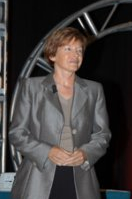
So Kim, what is wrong with the male dominated picture of network marketing? I think what's wrong is it doesn't represent the numbers— and as far as I know it has never represented the numbers, but it certainly doesn't represent the numbers of the people that are in the business today.
According to the Direct Sales Association (DSA), the industry is comprised of 20 percent men and just 15 percent of the people in the industry are actually full time. So, we have it on two counts, number one, the people that are in the business are primarily women and number two, 85 percent of everyone, including men, are part time.
So, this is really an issue about two things— to whom are we speaking, who are we recruiting, who are we training, in terms of the sexes? And the other issue, one that goes hand in hand, is how many people are part time versus full time?
What do you mean, 'they go hand in hand'? They go hand in hand in the sense that when you sit in a meeting room or you listen to a conference call, the people that are being recruited are being enticed by the big income.
The only people making big income are going to be people who do the business on a full time basis or who have done it on a full time basis. That happens to be mostly the guys.
The men have been traditionally the bread-winners and so they're naturally the ones that are going to be doing stuff full time in almost all cases, except for career women, and they are still pretty much the minority.
The business has aimed at the full timers, which is primarily men, because of the way our culture is, even today. It's not to say women don't make big money. They have, I did, except for the gentleman who sponsored me, I made more money faster and hit the top faster in my last company than anyone had in the 25 years previously. Kathy Minsky, at Shaklee, is the number one woman over there and has done it faster than anyone ever has, including men and women, in 50 years!
So, it's not like women can't do it, but there are very few of us— and who really knows what the reason is, but one of them certainly is our social history that men are the bread winners and women raise the family and run the communities and schools and take care of the men.
When I hear meetings where they are talking about how you can make 10 grand a month in three months, or six months, or even five grand a month, I hear, "this is a full time effort." and how many women are going to do a full time effort?
I look at the industry and read figures like those published by the DSA and think, "Wow, 85 percent of everyone in the business is part time." This invites a few questions:
Why are we pitching only full time income? Why do we have recognition for only full time people when it's primarily part timers?
And on top of that, 80 percent of the people are women, who are the supporting cast for the men up there in the front of the room.
So, we have that and then we have the language that's used— we're gonna 'explode' our business, we're gonna 'ignite' this, we're gonna 'beat' so and so… women don't talk about things exploding. The ones who play the exploding game and the big noise game, they're the boys. Women don't react very well to that and we're told, "you know, you're just not committed; you don't have the belief… that's bullsh-t! Women pick up the pieces after boys explode stuff; so even the language that's used is very different.
There's an interesting book called, Marketing to Women, by a gal named Marti Barletta. I have a little annotation about it on my website. Her book was written for the overall marketing world, not the network marketing world per se, and she talked about the differences, in general, between men and women. There are some very interesting companies, like Nike, that have taken her quite literally and have changed, completely, the way they market, so that they stop missing all the women. This is a lesson that I think our industry definitely could learn.
One of the things she talks about is that women put people first. In terms of marketing, "user focus trumps product focus", that's her quote. She says,
"Men, for example, may be interested in widgets and gadgets of cars and high tech, while a woman's eyes glaze over as she starts looking around for someone to talk to. What the product means to the person who uses it is far more likely to seize her attention and hold her interest. Play your cards right. Just as in poker, cards with people on them will beat cards with numbers every time."
And this is an interesting thing since we're talking of features and benefits and all of that. I'm not much into features, because it's all in the minds of the listener, not the speaker. When somebody is trying to sell something usually you'll get the features, like the car goes x thousand miles an hour, it has x number of tires, you hear about the things about it. But women want to know, could you use it to go to the beach and can you put the dog into it. Is it easy to clean and will it still look pretty good when I take it to my real estate showing?
It's about how people use the product which is something women tend to talk about. How do you actually use it rather than how much horsepower does it have.
Same thing with computers, it's the guys who sit around and talk about how many gigahertzes it has. I'm a techie person, so I'd learn how to talk like that too but women tend to ask, what can I do with it? Can I make a grocery list? Can I upload pictures to it? Can I take it to the beach? Women are more focused on the use of an item.
Now Marti Barletta says this is a characteristic of women My whole book, If My Product's So Great How Come I Can't Sell It? , unbeknownst to me at the time I wrote it, focuses on showing how to talk about the products in terms of what it's done for you. Rather than say, "I've got this great product, it's the cat's meow and feeds you at the cellular level and doctors say it's great…", I've told people to simply share what the product has done for them. So, your story might be, "I had achy knees, they hurt every time I went up and down the stairs, so I tried this product and they don't hurt any more no matter how much I use the stairs. Lo and behold, my knees are fine now and I'm even playing tennis again, do you know anyone who might want to buy a product like that?" It's completely experienced based about how someone has used the product.
When I finished writing the book, and published and started teaching these classes, which I've done for three years now, I read Marti's book and I was so drawn in by this observation that she makes about women. I didn't write my book for women. I wrote it to help people describe what they have in such a way that somebody else might listen, by simply telling their personal stories about it. Not making any promises about what it's going to do for somebody else.
But Marti says this is a characteristic of women. We tend to think more about how somebody uses something, than about all the features and benefits of it. A very interesting thing, just about men and women, and how companies like Nike have taken it on and started describing the women that are using their product. And a few other companies are using that idea, too. These are just observations about marketing that our industry, our profession, should take to heart.
Another interesting thing— and John, I think you've said this before and it's nice to know that you get validation from other places— she says, "Listen more than you talk, there is no need to strut your stuff." This is her talking to the marketing men on Madison Avenue and she's giving them advice on how to deal with women:
"One way men earn each other's trust is to communicate their track record. A guy will talk about how good he is to prove he can do a great job. He will say things like, 'Half of my clients are worth over a million dollars.' or 'I doubled his return in six months'. Men talk about achievements, they drop names, and they'll let you know where they stand."
She calls these credibility displays and acknowledges they are the right thing to do in the male culture, because if they don't, men will assume they don't have anything to brag about.
She goes on to say, "Women don't brag. They'll tolerate it quietly but they won't be impressed. As a matter of fact, rather than build respect, credibility displays are much more likely to ruin rapport."
This speaks directly to the way we market, and the way we train men and women how to market, by talking about the big income. You know how guys like to tell exactly how much they made?
It's exactly this parallel.
So, what can we do about that...? I had one of the top women at Bodywise in one of my classes a couple of months ago. She is really making 'gangster' money, over $50,000 a month, and she said, "For years, Kim, I would do all the three-way calls for everyone who has a woman on the phone" (she still does, because she is a woman who has made so much income with her business). She said the first thing they would do, when they got the woman on the phone— as the owners of the company had always told her to say how much she was making— so she would say to the woman, "Well, are you interested?" and the prospect would reply, "Yes", so she would say, "Well, I'm making six figures a month and I live in a big house…blah, blah, blah" and she said most of the time the women said, "No thank you." She couldn't figure out, for years, why she got that reaction. And so when she shared that in the woman's class that I teach, we told her what she might do instead, which is of course to first ask what the prospect is looking to make rather than telling her what you're making already. This is a complete change. Because the assumption is, from the male point of view apparently by how the training is done, as soon as someone says, "Yes, I'm interested in the business" you start telling how much you make, or how much somebody else is making and you lead with the strutting of your stuff.
You see, now it falls into place for me why I've had this attitude for so many years, it seems to be a woman/guy thing, which I was not aware of until I read Marti's book.
I tell people, don't lead with the money, even if you're making a lot, because you don't know what the other person wants.
Maybe they only want $2-300 a month and you'll put them off entirely, or it shows you haven't even listened to them. Ask them! "What are you looking for? How much are you looking to make? How much time can you put into it? Have you ever done anything like this before?" This was so novel to this gal from Bodywise, that during the whole period of the seven week class, she changed her technique and asked the women that she talked to these new questions. She said the results were like day and night. The change in how women reacted to her was absolutely like day and night. She said now she doesn't have to talk about how much she's making, it rarely comes up, because most women are looking to make $3-400 a month. Not because they're stupid or don't have big income goals, but because they only have five or six hours a week. That's it! The rest of the time they are running their households, taking care of their families, kids and husbands.
These are just examples but I'm thinking, my gosh, it must be a woman thing; that's really when I started looking at the numbers in the business. When I saw what the numbers were from the DSA, who was really in the business, I was amazed and thinking, "You've got to be kidding. We're teaching to the wrong people here."
Why don't we focus on the people who are part time, which is 85 percent, and women, and use language and approaches that suit the significant majority of those in the business?
A last point about this particular marketing to women book, one of the things she says that men do, but women don't do, which is very appropriate to our business, is that sales people are trained to try to close the sale in the initial meeting. That may work with men, because they have a faster decision making process but, frankly shooting from the hip and making decisions on the spot is one of the ways they communicate their autonomy and decisiveness. Barletta calls it the 'cowboy factor'. However, women are marksmen, not cowboys, and if you rush them or push them while they are trying to zero in on what they want, all you're going to do is irritate them.
She says, as I do; don't try to close on the first date. I have used that example for 10 years. You know, please don't drag me into the backseat on the first night! Guys are very hot to close and they like to say, "Well last night here's what I did" when they talk about their sex lives or their business. It's a thing men do and they don't mind it.
For men, it seems to work just fine but for women, we don't like being dragged into the backseat on the first night, in any way, shape or form.
So, if the training were just to accommodate the fact that the woman mindset is a little different in these areas, it would make quite a big difference in the number of dropouts that we have. I've always been appalled that 95 percent of the people don't make it, and that means 80 percent of those 95 percent are women, because that's who is in the business. There's no reason for that. The people who train and who are in the business need to realize that nobody is wrong here, it's just that there are different strokes for different folks, but we need to make some changes to accommodate how women think, how they are, how they like to market and how they want to be marketed to. It's not just in network marketing.
Any other suggestions about how to begin to aim this more at women? Yes! Rather than leading with the big money and free time and all that stuff that almost nobody makes anyway, including men, we could focus on how to earn 'mad money'; how to earn $2-300 a month on a regular basis. That's number one.
Number two— values; like I, for example, do this work, am having this conversation with you, because I really care about the business. I think the business model is a fabulous business model. The idea of having hundreds of customers, that you can earn regular income from, like AOL, cable TV and Sirius radio, the model is a very solid one and I think we could focus differently on things. There are a couple things specifically;
First, the part time folk, but second, instead of fixating just on the recruiting, include a big training component on how to get regular, long-term customers.
This is the only industry I know of where customers are given short shrift. I've never heard of a business, an American company, where customers are considered secondary. That's just silly. Everyone on the planet is a customer of something and getting regular long-term customers' needs to be at the front of the conference calls, not just recruiting. There are always way more customers for any good product than there are going to be people who want to sell that product. Only 1 in 100 people want to do sales for a living. Your numbers are right there. It has nothing to do with being a network marketer.
The third thing is to think about the values. For example, if somebody has a nutritional company— instead of talking about how their product is best in all the history of the world, which of course everyone says about their product, focus instead on finding people for whom their health and nutrition is the most important thing in their life. In other words, let's find the aficionados, people who already feel like their health, specifically nutrition and taking the top of the line types of supplements, is important.
So, you're going after a person where the values already are a match for your product.
I do a lot of training with different distributor groups from different companies so... for example, Melaleuca, one of their product lines happens to be non-toxic cleaning products, so we tell their distributors, "Why don't you find a group of people that already recycle?" People who already demonstrate that they already have an interest in this type of thing would make far better prospective customers than just talking to everyone.
I teach that it's like starting a tennis club. If you were to open a tennis club in your home town, you would probably put a big sign up on a building announcing a new tennis club coming. You would try to find people who have an interest in playing tennis. You're not likely to want to stop everyone passing by on the street and demanding they explain why they don't play tennis and then try to explain to them the history and value of playing tennis. People just don't do that.
Marketing products should be done just like you were opening a tennis club, so that you find people that have an interest in the game in the first place; either to learn it or improve and enjoy it.
Then ideally, you pull in a pro, like an old Jimmy Connors, somebody who is known to the world, to teach or do a demonstration, because then everyone else, who is not as strongly committed would tend to want to go to that club, because there is somebody there who is known to be an expert at it.
So we teach people, based on your values of why you're marketing the product in the first place, if nutrition is important to you then find people for whom nutrition is important. Buy mailing lists where people already buy nutritional products and show them what you have. Chances are if you get some of those people, they'll talk to other people about it, because they're already super interested in it to begin with. That's what we're showing people how to do.
It's not just selling anything; it is selling things that are important to you and finding people like you, because they have those same kinds of values.
It so happens that that is very consistent with the way women are. Those are the kinds of tips I have that flow from these observations.
When you and I talked, a number of days before this conversation, we kidded around a little bit about how network marketing had a gender. If we were to look at all of the businesses out there, franchising, corporations, etceteras, and 'sexed' them, we'd come up with the fact that network marketing was female. Yes, yes, network marketing is a woman!
I guess this really would be a personal thing, I don't really know how true it is across the board, but the reason I did network marketing to begin with, the very first time I did it, was because I really liked the product and I thought there would be a lot of people who would also like it. I also thought there would be people who would like to know about it if they were interested in their health like I was. I think the idea of being kind of missionary-like because you have a certain value system, is something very female. I don't want to make it look like men don't, certainly I know there are men missionaries, but I think it's particularly a woman thing, to want to nurture and support.
I would say it's the women who probably make most of the men take their vitamins and try to eat right. It's not the men who, in their families, have that role. To the extent that 80 percent of our industry is personal care and nutritional product, I think it's a good match to women.
Women are the ones who have been the life-givers, the care- givers, the ones who encourage the others to take care of themselves.
As an example, I have my 28 year old nephew living with me and I'm still reminding him to drink enough water… I bring him the water! I saw myself doing it this morning! So, I think the kind of products the industry has typically marketed tend to be those that women have been closest to given their roles in society. That, and the fact that women like to tell other women about stuff that works!
Of course, when it comes to sharing a product that you financially benefit from too, we teach people to be upfront about that. And that can certainly be done in a way that's quite natural by simply sharing that you found a product that you liked so much that you decided to sell it. Then the other woman knows that any pitch is going to come from someone who is marketing the product, but there's a reason, they're marketing it because they love what it does for them.
Now, I realize that everyone didn't get into the business because of the product. There are a variety of reasons and another big one is because they want a business of their own and this is affordable, and that's true for women and men. But I would say over 50 percent of everyone that I've come across, and probably close to 75 percent, do the business part time because they really like the product and they like to see the word spread about how it helps them. That's what women do; they talk about stuff that works.
Kim, in terms of network marketing being a women, how about in the role of sponsor, of upline and leader? What about the caretaker, the nurturer, the mother? Well, that is the downside. I have no question about that. There is something I call the 'Mother Theresa syndrome'. Women tend to be the 'Mother Theresa's.
The guys approach is, on one extreme, let's throw 'em up against the wall and see who sticks where the women's is that they want it so much for someone else that they drag 'em across the finish line.
That is where the tendency's that women have is not so good for the business, in the sense that if you tend to want to nurture and carry everyone with you, you end up dragging a lot of people for whom it's not the right thing to be doing. Women have to look out for that. They need to learn how to be a guide and not to drag. Probably the biggest complaint I hear from women in the industry is that they don't know how to let go of that 'Mother Theresa syndrome'. It's a hard one.
What I teach the women in my classes to do is to make sure, when they talk to another women, that whatever problem they're talking about, whether it's that they wish they had more money or wish they could lose weight or had better skin, if you have a product or service for it, make sure the person is speaking from a 'change' list and not the 'venting' list.
Ask the person if this is a serious thing for them or if they're just venting.
Because a lot of people vent, I know I vent about how disorganized I am, I vent about it all the time, but I don't do anything about it except maybe once a year. On the other hand, there are a few things that I do think about, that are on my 'change' list, so it's important to ask.
Some people would rather complain about having enough money at the end of the month than change what they do. There's nothing wrong with that, it's just that we recommend you know which it is.
Because once you know it's on the 'vent' list and not on the 'change' list then you can let go and not be left with the feeling that you're not a 'good mom'.
Is there an upside to the caretaker, teacher aspect? Yes! There's an upside in the sense that women like to do things in teams. This is a business where going two by two is the best. There is no better way to go anywhere, to talk about the business, to talk about the product, than to go two by two and that's a wonderful thing women have a natural inclination to do. It's not practiced enough; it's talked about that you're in business 'for yourself but not by yourself', but that's not the way most companies and uplines run their businesses.
You're in business by yourself, when you give them your $100, all of a sudden there's nobody there anymore. Countless people tell me that all the time. Their upline disappeared right after they signed up, either disappeared from the face of the earth or quit the business or just kind of left them on their own.
If women were left to their own devices and taught that we're going to go two by two, let's go and make the presentation together, let's do the presentation together, they would see far greater success.
There's a lot of upside to being a women in this business! Talking about the products. How people have used them. How they have used them. In my classes, 100 Customers in 100 Days, I have probably put 6-7000 women through them in the last three years and they are people who really hadn't thought about, until now, really having a large customer base. These women are getting customers now and love it because they can talk about the product now and how it helps them. These are things women like to talk about, so these are very good things.
Women tend to find more enjoyment in getting regular customers than they do recruiting. Not all women of course, but the large majority and the guys say they like to recruit. There's no problem with that, but why not teach the things that tend to go with the preference. Since we know these things now, about men and women in the business, these are things that should be added to what is being taught right now across the country.
Do you see a change coming in that direction? I think so. In the last 10 years all of advertising has taken a big hit, because there is so much more of it. But there are so many advertisers who are not really telling it like it is and in our field in the last ten years, the promises that people have heard have so rarely been kept that the dead bodies are everywhere. So, I think the stigma today, attached to network marketing, is worse than I have ever seen it and that's one of the reasons.
The whole advertising scene is so different, because there's just so much of it— five thousand cable channels alone. There's so much advertising on radio that there are now two radio satellite networks where people can pay $10 a month to basically get advertising free radio. There's too much advertising and in our case, there is too much making promises that nobody keeps.
We need changes, where there's a focus on things that people can believe, like products that actually make a difference, and where your downline consists of maybe three people that are actually recruiting and bringing in 100 long term customers. That's a model that's more likely to survive the test of time than having 10 people that you recruit and having nine of them drop out when they discover it's not as easy as you said it was going to be.
So yes, what I think and hope will happen is that as companies focus more on long term product users, like regular American companies, and less on the recruiting, there will be much less disappointment.
There really are far more customers for a good thing than people that are going to want to sell it in any industry.
Any last words for us, Kim? I think your magazine is probably the best thing that has happened to network marketing for as long as I've been involved with it. Because you are bringing in people who have different points of view and they are not tooting their own horns and saying silly things about how easy it is and anyone can do it.
I'll tell you, I am working with a guy in the biggest networking company in the world, the one with the big 'A', and he has thousands and thousands of people in his downline, especially in other countries. He told me he's been doing this for 20 years and he said, "Today it is so different. If we don't change the way we do the business, and stop leading with recruiting, the whole thing is going to tank." He shared that in his industry and in his company, in the last four or five years, their sales have gone down by 40-50 percent. That means all the way across the board. He had planned a tour. They take these cruises and every year they take their top people with them and five years ago he had 400 people coming with him. This year he had three couples. He says it's across the company, especially in the United States, because people don't believe any more. There are too many promises that people made that nobody kept. He said if we don't change and start focusing on bringing in regular product users we're doomed. People certainly won't want to stay in a business where nobody makes it and in the States, particularly, it's a big problem. This from a guy who has 20 years in the industry and loves the business.
And you, John, are the only one that I know that has a magazine that has people writing in it that are not just from our field. You have people that are in it and outside of it, so those of us who are training in it and have an interest in it can, hopefully, shake up the old guard and let them know we need to make some of these changes and tell them to stop blaming the distributors for the failure of the industry's training not coming into the new millennium.
It is 80 percent women; we should have a focus on the products. Look at Steve Jobs; somebody says, "What do you think he does to make money? Does he open stores to make money? Does he go online to make money?" Well, he does all those things but he makes money selling Ipods, and the means are— the distributor networks that he had, the Apple dealers, the online and the offline, but what he does is he sells a product!
I think the more our industry gets back to that, telling the story about the product and the more there are people like you who support the industry with thoughts of others from the regular world, like Seth Godin, Tom Peters and others I know you're planning on interviewing, the better it will be for everyone in the business, including me, so I'm very grateful to you.
It goes both ways, thank you Kim!
_______________________________
Kim Klaver (also know by her stage name Ms. Stud), is the Mastermind behind BananaMarketing.com (formerly MLM911.com) and is the author of all the books, tapes, tips and articles you will find on that site. Kim travels all over the US entertaining and motivating the troops, "New, New MLMers", with her radical tips and no hype techniques.
A Harvard, Stanford & MIT person, Kim became a network marketing industry superstar. Her live events are standing room only shows to entertain, delight and offer alternative techniques to find those elusive, 'right' ones for the business.
Kim's book, If My Product's So Great How Come I Can't Sell It? is truly a must read. You can have a free 23-page introduction and learn how to purchase the book at her website with our affiliate link, here:
BananaMarketing.com (It's down on the right.)
John Fogg wrote this about Kim and her book: "Nothing I know of will make more of a profound and profitable difference, faster— in your business and for your people's business— than learning what Kim will teach you about presenting your products the "right" way to the "right" people. Once you know THAT, you will be more successful than you've ever been before— ever!" Kim's message is both Powerful and Immediately Profitable!" And be sure to check in with Kim's blog, here: KimKlaverBlogs.blogspot.com
_______________________________
ATTACHMENT NETWORKING | RECRUITING | WOMEN Recruiting "the nylon money woman" Why not start there and find the obvious treasures, and stop trying to change the very people who might love this business if we could just recognize them and nurture them for who they are? At least stop walking right by them. by Kim Klaver 1887 words | 7 pages
_______________________________
AUDIO NETWORKING | RECRUITING | TRAINING | SKILLS The Skeptical Market Recruiter Here's the DEMO disk from Kim's latest training program. In her book, If My Product's So Great How Come I Can't Sell It? she takes on the business of getting and keeping retail customers. On this new 3 CD album, she aims the same no-nonsense, anti all that's hype and hyper approach to practical results-getting recruiting. by Kim Klaver approximately 27 minute downloadable MP3 This CD covers: The Skeptical Marketplace... The Gaping Gap in Network Marketing... Shall We Agree? The Women and Cold Market— Openers... all from Disc 1 of Kim's new recruiting training program.
The readable text follows the preserved original publication. The original PDF remains available alongside it.