article · August 2006
Mindset over Materials - and Most Everything Else
Ultimately, the mindset creates top performance, excellent production numbers, and prosperity for both the distributor and the company he or she represents.
Long-term network marketing success has less to do with skills or knowledge than you might think. Nor are stunning brochures or excellent products guaranteed to make one iota of impact over time. Unless certain critical elements already exist in the distributor, providing training and tools in hopes of improving performance does nothing more than giving a PGA golfer’s best driver to an amateur. The club itself can’t make someone a pro.
Yet a pro can take a cheap driver and make a better shot than an amateur with the best and biggest Big Bertha has to offer. Likewise, you probably know one or two standouts who have excelled without classic training, without flashy support materials for their products, and even without a superior product to represent.
Then what makes the difference? If it’s not remarkable closing ability, appealing brochures, outstanding product knowledge, or relentless objection handling… if it’s not talent or brainpower or tools that create sustained success, what is it?
In more than twenty years studying the top performers in many fields, I’ve discovered the mysterious X-factor is mindset: a group of attitudes, understandings, beliefs, and resulting behaviors. Whether you’re talking about golf or marketing or any other pursuit, the same principle applies.
Ultimately, the mindset creates top performance, excellent production numbers, and prosperity for both the distributor and the company he or she represents.
Creating a mindset of sustained success requires you to focus on three key areas: 1) the beliefs you have about yourself; 2) the attitudes you have about your customers, product, and industry; and 3) the ownership you take of your own success.
Adopt Positive Beliefs About Yourself Positive thinking has been on the lips (if not the minds) of people in network marketing for many years now. But in adopting positive beliefs about yourself, you go far, far beyond the Stuart Smalley mantra of “I’m good enough, I’m smart enough, and doggone it! People like me.”
Let’s look seriously at the subject of beliefs. What are they?
Beliefs are nothing more than habitual thought.
Thoughts, and the words we use to express them to ourselves and others, have corresponding images in the mind. These images have corresponding emotions, the emotions have corresponding actions, and actions have corresponding results. So the path to any result is thought/word-emotion-action-result.
If you want to improve the results you are getting, you must interrupt the habit of thought and create a new one. You must walk a new path.
Although I’m not a doctor, when a friend of mine with cancer was looking for ways not only to beat the disease, but also to feel better during the process, I did have one piece of advice for him. He had to begin to imagine himself whole, complete, and well. He needed to actually spend time seeing himself in his mind’s eye in robust condition. He needed to create a new habit of thought, one that focused on the new result he desired.
“You have to stop thinking, I don’t want to have cancer,” I told him. “Instead, you have to start thinking, I am healthy and whole.”
Otherwise, the mind fixes itself on the negative. If I say, “Don’t think about ice cream,” what happens? Your brain holds onto the idea of ice cream like a dog with a bone. You can’t not think about ice cream. So, instead of thinking about being rid of cancer, my friend had to visualize himself as completely healthy.
“Let your mind latch onto the positive,” I counseled.
Does it work? Just ask the gymnasts who are taught to work through injuries with visualization. Instead of practicing with a badly sprained ankle, for example, they lie on the floor and imagine themselves doing their regular warm-up, work-out, and cool-down every day. Many gymnasts report that when they come back from an injury, they do as well if not better— as long as they’ve been visualizing during their time off.
Please know that I don’t believe we can always think our way out of injury or illness. Nor do I believe we always think our way into health problems.
But there’s no denying the power of the mind to help us heal and its equal power to hinder us in our healing if we’re misdirected.
The mere thought or utterance of the word cancer must create a corresponding image of disease, setting off a dangerous cycle. Likewise, my friend’s visions of wholeness created a completely different picture. I’m delighted to report that, with this mental boost and other health- affirming practices, my friend’s cancer went into full remission. He continues to receive clean bills of health.
The Inner Game of Network Marketing You have to see yourself as successful in the inner game in order to be successful in the outer game. When you give that “command” to the unconscious mind— when you imagine how you’ll feel, look and sound when you are producing at the level you desire— the mind thinks it’s already occurred and calls for an encore performance in the real world.
The first step to changing your own “mental programming” is to recognize it. Think about it. Think about why you don’t do what you know intellectually you should. Then start thinking about what’s behind it. What do you have to believe about yourself, your world, your product, your industry, to cause this behavior to occur?
Some common underlying beliefs that regulate distributor’s performance are • “I need more training and skills before I can succeed.” • “I’m not worthy of earning more than . . . ” • “I’m not good at recruiting.” • “I’m not able to attract and retain great team members.”
Once the underlying belief is uncovered, a new belief must be chosen. The new belief can be the opposite or an “antidote” to the old one, such as “I have unlimited life knowledge and experience.”
New beliefs must then be “installed.” Specifically, the new belief must be supported by both evidence and habit.
Start by answering a simple question: What will I have to see, hear, and feel to cement this belief? Then begin vividly visualizing these results at least twice a day. (Note: the mind is most open to suggestion first thing in the morning just after waking and the last thing at night before sleep.) Many people think that results build belief, and in some cases this is true, but it’s more often the inverse. Remember the chain: thought/word-image- emotion-action-result. You must be able to see yourself already in possession of the outcome of the new belief.
Champions in any field create an unbending belief in themselves, program themselves to continually find evidence to support its truth, then consistently and vividly see themselves in possession of the desired goal. William James, the father of modern psychology, said:
“Your belief creates the fact.”
Now Forget Marketing, and Focus on Your Customers Once you’ve visualized yourself achieving your goals and removed any psychological obstacles, it’s time to put those goals aside and focus on the customer. Again, this all happens in your mind, but it has a profound impact on the way you affect your outer world.
Today’s customers and clients require a new attitude, one that offers something rather than asks for something. In a high-tech society, high touch is highly valuable. The new-school distributor focuses on giving instead of getting, on providing service. Always a man ahead of his time, Henry Ford captured this mindset eloquently:
“Wealth will never be achieved when sought after directly; it only comes as a by-product of providing useful service.”
This level of service takes some guts. Sometimes you have to tell people what they don’t want to hear. Sometimes, you even have to say, “Maybe this opportunity is not the best for you… I really want you to achieve what you want in life.” Service means that you’re no longer willing to do whatever it takes to close the short-term deal. Now you’ll do whatever it takes for the customer— because it’s the customer who makes or breaks your business, not an isolated transaction.
Old Hat, New Head: Take Ownership of Your Success Have you heard these ideas before? Are you utilizing them as you should? If not, why not? Likewise, are there other, obvious principles of business success you’ve overlooked? How about basic accountability for your words and actions, taking responsibility when you mess up then finding new and better ways of doing things in the future? How is your self management? Are you spending your peak hours during the day on what actually helps you achieve your goals?
The bottom line is that network marketing success grows out of a fundamental mindset, based on some ideas that may be “old hat,” but that require a “new head” to fit you.
If we’re looking for a label to capture the essence of the attitudes, understandings, and beliefs you need to make the hat fit, we can call this the Entrepreneurial Mindset®. Regardless of whether you work for yourself or for someone else, begin to think of yourself as an entrepreneur, as the owner of your own success. Consider the implications . . .
• As an entrepreneur, would you have to first and foremost believe
in your ability to achieve?
• Would you have to be passionate about what you and the product
have to offer?
• Would you be willing to settle for mediocrity? Or would you strive
for excellence?
• Who would you consider responsible for every result you
produce?
• Would you be more interested in identifying problems or in
proposing solutions?
• Would it benefit you to be more rigid or more flexible? • Would you value comfort or creativity? • Would it serve you to wait and see what happens, or to be
proactive and growth-driven?
• Would you amble through the day mildly interested in the people
and happenings around you, or would you exert enthusiasm in all that you do?
The answers to these questions seem obvious. I operate from the premise that you know what you need to do, and you have what you need to create a six- or seven-figure income. Most distributors have heard all the “magic bullet” ideas and pitches. But until you begin to think in new ways, you will never apply these time-tested principles.
The distinction between short- term flashes in the pan and sustained success is simply doing what may seem obvious to you right now.
As they say, if the hat fits, wear it.
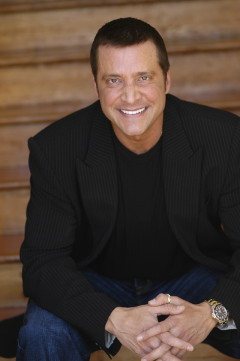
By James Arthur Ray P.S. I just finished a hot new presentation called Create Absolute Wealth and a report called Balance is Bogus... And I want to get them to you right away as my gift. Just click here to download your FREE special report.
James Ray is a principal expert in the science of success and the power of The Entrepreneurial Mindset®. He has devoted almost two decades to studying success factors, and gives audiences these advanced strategies for accelerating results in the areas of sales, service, personal achievement, and team performance. James shares the importance of an entrepreneurial mindset to lasting success in today’s market.
After achieving top recognition at AT&T for sales, management and leading their national telemarketing operations, James moved on as a master trainer with the AT&T School of Business and to establish a four year alliance with the Stephen Covey Leadership Institute.
James has since established his own consulting practice and is the developer of The Science of Success, a series of easy-to-learn, proven methods and skills that produce outstanding, consistent results in all areas of life. Companies like Merrill Lynch, Coca Cola, Dow Chemical, AT&T, Verizon, IBM, Acura, Boeing Aircraft, RE/MAX and numerous others have profited from and embraced James’ unique message and methods.
In addition to the production and development of his products, personal coaching and management of his own business enterprise, Mr. Ray conducts more than 75 days of keynote presentations, corporate training, and public seminars over the course of the year. James was recently awarded the coveted CSP designation, the highest earned honor in the speaking profession. Less than 8% of the professional speakers and authors in the world have received this honor. The secret to Mr. Ray’s success is his ability to take the seemingly complex and break it into manageable, understandable and memorable strategies for improvement.
James and his company, James Ray International, are committed to helping individuals and organizations who want to ignite the entrepreneurial spirit and accelerate their business growth.
James is the author of The Science of Success. He is a leading resource to individuals and organizations who want to ignite the Entrepreneurial Mindset® and accelerate their business growth. You can find out more about his speaking, seminars, and success tools at http://www.JamesRay.com Phone: 760-476-9077, Fax: 760-476-9074.
The readable text follows the preserved original publication. The original PDF remains available alongside it.