feature · November 2005
Are you putting people first...?
"I work to create a culture of transformation... a transformational learning journey through a culture which tells them, ‘I mean you no harm.' It is not a critical culture, but one of recognition and celebration, a culture which encourages them to reach for their highest and t…
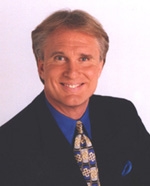
All of us at The Network Marketing Magazine have a soft and sweet spot for lessons learned from reading a story, ala John Fogg's Greatest Networker. The following is an excerpt from Jack Lannom's book People First. Because the article is excerpted, it cannot help but act as a teaser and come-on for the book, but it's an authentic, "Try it. If you like it, buy it...." deal. Valuable in and of itself, especially for people in the people business, and at just over 5,000 words, it's a long one. Make the time. "I work to create a culture of transformation... a transform- ational learning journey through a culture which tells them, ‘I mean you no harm.' It is not a critical culture, but one of recognition and celebration, a culture which encourages them to reach for their highest and their best."
A cry for help Dan is a troubled man— the CEO of a multi-million dollar business literally going to heck in a hand-basket; sales, revenue, profits, customer satisfaction and the majority of his 1000 employee's moral... all down— deep down— and have been going that way for years. He's working long and longer hours. His kids are strangers. He's afraid he's about to lose his job and his wife.
For six years Dan has been a student of Kung Fu, taught by a Grandmaster and World Champion, Sifu (pronounced "see foo", which means "teacher" in Chinese). Sifu is also a successful businessman with more than 100 martial arts schools (kwoons), thousands of students, lucrative investments and a stunning 10,000 square foot home.
Dan patiently waited after his last class to ask his teacher for advice and they agreed to speak the next morning over breakfast. The story picks up just after Dan has completed detailing his troubles to his teacher, concluding his remarks by saying, "I don't ever remember feeling like this. I feel like my life is spinning out of control. I know my company is out of control.... ____________________ Questions and answers Sifu sits in silence for what seems like a long time. Dan waits, fighting against impatience. Finally he can bear it no longer. "So what do you think?" he asks abruptly.
Sifu smiles at Dan. "A man who speaks with mouthful gives listener earful," he replies in his soft voice. There is humor dancing in the older man's eyes, and Dan realizes that he has been gently admonished for not waiting for the teacher to speak. Suddenly the voice of Sifu Li, Grandmaster, comes back to Dan from his years of Kung Fu training: "Be patient, watch your opponent, look for your opportunity. The fighter who rushes to attack without thought and study is often the one who loses." Dan makes a conscious effort to let the tension drain away.
As if sensing Dan's decision, Sifu begins to speak at that very moment, but only to ask Dan a seemingly unrelated question: "Dan, how did you hear about my kwoon?" Dan cocks his head at Sifu. What could this possibly have to do with my problems? he wonders. "Well, a man who used to work for me told me about the school." Sifu nods, his dark eyes sparkling with that gentle humor. "Richard Wiggins told you about us, yes?" Once again, Dan mentally kicks himself. Sifu hadn't asked the question to acquire information, but to guide Dan's thinking. "Yes, Sifu," Dan replies humbly.
"How did Richard convince you to join us?" This time, Dan considers before answering. "Well... someone told me that Richard had earned a black sash in the martial arts and won first-place in a regional tournament. When I learned that what other marital arts call a ‘belt' is called a ‘sash' in Kung Fu, I was impressed!
Here's a guy who could snap me in half without breaking a sweat, yet he always seemed so... gentle. Richard was always very much in control, and he displayed such great humility. I was impressed by his personality, so one day I asked him about how he kept himself in check, and he said he'd learned it from his Grandmaster... you, Sifu.
Richard kept talking about how much he loved your school and the wisdom you impart to your students. I guess you could say that I saw a product of your work, Sifu, and I was impressed." Sifu nods approvingly. "You have been with me six years now; you see how I run my kwoon. Have you noticed that I do not advertise? Others spend thousands of dollars in advertising, yet our schools are much more successful. What do you think is the reason?" "You don't need to advertise because your students do it for you," Dan says promptly, "like the way Richard told me about you. There are at least forty people from my company alone who go to your school. They all heard about you from those of us who are already there." Sifu nods and leans forward. Dan has grown familiar with the gesture over the years.
Sifu is about to impart something important, and Dan has learned to listen with respect. "When I was preparing to open my first school," Sifu begins, "my Grandmaster told me that I must concentrate on becoming an exemplary model of the art of Kung Fu. When I had accomplished that, he said I must always put the students first, rather than simply looking to make a lot of money. If I did those two things, I would succeed." Dan is a little puzzled. "Sifu, all your students know that you are a tremendous example of the art. We've watched you on television and seen you win international competitions. Now, I don't have international recognition, but I work very hard to set the right example for my people. I'm always the first to arrive at the office, and I'm usually the last to leave." "Yes, Dan, but you are missing one very important point." Sifu's voice is very soft. Dan recognizes the tone. Sifu is at his most gentle when one of his students has performed poorly. "You have spoken about what you do, but it is very important to remember this:
Belief is the basis for behavior; attitude is the antecedent of action; philosophy is the precursor of performance.
You work very hard, Dan, but what are you working hard to accomplish?" Dan answers automatically, "My job is to make our company profitable, so that it becomes attractive to investors. If they get a good return on their investment, they'll keep buying the stock. Then I make money, and everybody else makes money, and everyone is happy." Sifu's voice is gentler still, and Dan begins to wonder what he is missing. "Dan," Sifu asks, "what would you say is the truth about who people really are?" "The people who work for me are there to get a job done and earn a profit for the company," Dan responds. "I've made it very clear to everyone; they've got to perform in order to help me turn a profit for the shareholders."
"So... people are not first in your company?" Sifu asks. "Profits come first?"
Dan feels impatience returning. "Sifu, without profits I can't afford to hire any people!" Sifu's smile never wavers, but Dan can hear a new note of authority in his voice. The Grandmaster is speaking. "You have a serious problem, my friend. I am willing to help you find the solution to your problem, but it will take some time to outline that solution. We may be sitting here for a few hours. Can you do that today?" "Sifu, I have the time, but I don't understand why you're so sure you know what's wrong with our organization. What do you think is wrong?" Dan asks.
"You have dehumanized your company," Sifu replies implacably.
"If you reevaluate your thinking about people, and humanize your company, you should find that the profits you seek will follow."
"You see, Dan," Sifu continues, "before you begin to work hard, you must be sure you are working toward the right goal, yes?" Dan nods, looking at Sifu curiously. "Before you concentrate on great performance, you must consider the philosophy that guides that performance. As I said, your beliefs guide the way you behave." Sifu looks directly into Dan's eyes.
"You have bad beliefs about people, Dan. As a result you— and the people around you— are behaving badly, and your company is performing poorly."
Dan is abashed, but he feels compelled to defend himself. "Sifu, I treat my people very well. Our human resources department monitors compensation plans to be sure that we offer pay and benefits that are as good as anyone's—and better than most! We're careful to provide equal opportunities to women and minorities. We're a stable company with a good, clean working environment. What more am I supposed to do for them? How can you say I have bad beliefs about people?" "Let's discuss what the right beliefs should be," Sifu replies. "Let me give you some words which my Sifu gave me when I first started my apprenticeship: Truth in all things, wisdom in all things, excellence in all things. Would you say those are good words to live by?" "Of course," Dan replies.
"Good! So let us discuss the truth about who people are. Do you remember our interaction with Cynthia?" Dan looks at Sifu blankly. He cannot think of anyone he knows named Cynthia.
"Our waitress, Dan," Sifu reminds him. "Did you notice how she was smiling when you entered the restaurant this morning? That is because I honored her. I was truly interested to learn who she is and what makes her happy. Why do I treat her that way? Because she is a human being! Every human being has exalted dignity, exalted worth, and exalted potential. Cynthia is a walking miracle; she is a marvel of creation, and she is a fascinating mystery.
"Dan, when you sat down in this booth, I observed your interaction with her. There was none! You stared at your menu; you did not look her in the eye even once. You did not acknowledge her in any way, except to tell her what you wanted from her. That is a close encounter of the impersonal kind.
When I met Cynthia, I asked for her name and used it, I talked to her, and I learned about who she is. I received her, I engaged her, and I celebrated her. I treated her as a valuable individual. She does not have to guess how I feel about her; she can tell by the way I treat her.
Watch how she serves me while we are here; she works willingly, and with passion. She is operating in excellence. I have helped to elicit that excellence because I live in celebration—the celebration of the human spirit.
"There is no such thing as ‘Big "I," little "you"' in my world, Dan. Each individual is important; everyone should be treated with honor and respect. I believe Corporate America has forgotten the truth about what it means to be human." Sifu smiles again to take the sting from his next words: "I am afraid you may have forgotten, my friend." Dan opens his mouth to object, then closes it again and drops his eyes from Sifu's steady gaze. He may be right, Dan tells himself.
"We have talked about truth in all things," Sifu continues softly. "The next point is wisdom in all things. Wisdom means knowing where to focus our energy and attention. You know that from your martial arts training, Dan. Kung Fu is all about the wise application of force and leverage in the proper spot, yes?
A man or woman in business must focus energy and attention on people first— not profits first.
This is wisdom. The people in your organization are your most valuable asset. They are the ones who will earn the profits—if they perform with passion." Dan shakes his head. "But Sifu, you don't understand my situation," he objects. "My people aren't loyal to me. I have to stand over the employees all the time and tell ‘em what to do; otherwise they don't work. There's got to be hierarchy and control, or nothing gets done." "I agree, Dan, there must be subordination in all aspects of life—in family and everywhere else—but it must be a functional subordination, not a subordination of human worth. Each member of the family—and each member of your organization, Dan—is valuable to the overall structure. The contributions of each member are considered to have immense value, because each member is contributing to the success of the organization.
"Dan, you refer to the men and women on your staff as ‘my people' and ‘employees.' Would it not be better to call them ‘Purpose Partners'? Do they not all share with you in the purpose of making your business successful? Are they not your partners in accomplishing that goal?" "That's just it, Sifu," Dan grumbles. "Most of the time it seems like their purpose is just to put in time and pick up a paycheck. It's like they could care less about serving the customers!" Suddenly Sifu's eyes are very bright. "Listen to me, Dan." For the first time, there is something like urgency in his voice. "If you hear nothing else I say, then hear me now:
The men and women who work for you cannot impart what they do not possess! You have a bad belief about people; therefore your staff does not exhibit good behavior.
"Dan, the best philosophy is the precursor of the best performance. You want to change the behavior of your staff without talking about your philosophy. Your beliefs should set people free to be themselves and encourage them to tap into their potential to its fullest. Your philosophy should dictate the recognition and celebration of the human spirit. Every day at work should be a day of celebration for every member of your staff." Sifu is interrupted by Cynthia's cheerful query: "Would you gentlemen like some more coffee?" During the exchange, Dan makes a conscious effort to look into her eyes and smile, and he realizes that Sifu was right; Dan is looking into the eyes of a complete stranger. He had not so much as glanced at her when she took his breakfast order. When Cynthia has filled their cups and departed, Dan looks humbly back at Sifu. "But how do I do what you're saying? Make every day a day of celebration?" "You create an environment of recognition and celebration by putting people first," Sifu replies. He sips his steaming coffee and smiles with pleasure.
"The philosophy is People First— whatever you want your customers to feel, your staff must feel it first! "
When you do this, you will be practicing truth in all things, and wisdom in all things, and this kind of leadership produces a legacy of excellence. Excellence is the inevitable outcome of this philosophy. People will work in excellence when they are being treated excellently! And with the excellence will come the profits you seek. Profits are the spiritual and monetary outcomes of operating a business in truth, wisdom, and excellence. " Dan is unconvinced. "Sifu, I'm grateful to you for making time to meet me this morning. But I came to talk to you about my business, not about philosophy." "Dan, the practice of every thing is the practice of some philosophy," Sifu replies, unperturbed. "When you walked into this restaurant, I introduced you to Cynthia, and you immediately put your philosophy about people on display for all to see. You demonstrated that people are not very important to you. Yet you expect your Purpose Partners to demonstrate that your customers are very important to them! How do you expect your Purpose Partners to value what has not been modeled for them?" Dan looks at Sifu wordlessly. He would like to argue..."Bluster" would be a more accurate word, he acknowledges wryly. I've watched how Sifu treats his students for the last six years; I know I don't honor people the way Sifu does. I didn't even look at Cynthia!
"Do you remember, Dan, the night at our kwoon when you first broke a board with your hand?" Dan is jolted out of his thoughts. This, at least, is a happier subject. "You bet! I'll remember it for the rest of my life," he replies warmly. "I was pretty nervous, but you kept telling me you knew I could do it, and reminding me of all you'd taught me, and I broke it!" "What exactly did I do?" Sifu prompts.
Dan smiles. "You led the whole class in a cheering session. Before I even broke the board, everyone was chanting ‘Dan! Dan! Dan!' And then after I broke it, you grabbed me and hugged me..."—here Dan's voice softens— "...and there were tears in your eyes, Sifu." Dan looks at his teacher with wonder. "Breaking that board was the last test I had to pass in order to get the gold sash—my very first sash. You took the board I broke and signed it in front of everybody, and you personally tied the new sash around my waist. You handed me my certificate of accomplishment, framed in a nice frame. My wife was there, and my children... and there were tears in my eyes at that point... I'll never forget it." "We celebrated you, Dan," Sifu nods. "We honored you." "Yes." "Now let me ask you, Dan; how much celebration takes place at your company?" "What do you mean?" Dan asks.
"When an individual or group achieves small, incremental accomplishments, do you celebrate them?"
Dan hesitates, feeling trapped.
"You, personally, Dan?" Sifu persists. "Do you celebrate your Purpose Partners?" Dan's eyes drop. "No," he says quietly. "No, Sifu, I don't celebrate them like you did for me... Personally? I don't celebrate them at all." Sifu's voice is very gentle. "Dan, if your customer satisfaction scores are low, I suspect that employee satisfaction is much lower." Dan nods an unhappy acknowledgment, his eyes still downcast.
"And if employee satisfaction is only thirty or forty per cent," Sifu continues inexorably, "how can you possibly expect customer satisfaction to be 100 per cent? Or even seventy-five per cent? You cannot impart what you do not possess.
"Dan, my Sifu told me to concentrate on celebrating my students, all their little accomplishments, and sharing all their joy. He told me, ‘Do not wait for them to get their black sash; you will be waiting for years to celebrate them!' He said that when the students break that first little board, no one should celebrate more than the teacher. And as the students move on to the more advanced sashes, the teacher should be the one who takes the greatest joy in their accomplishments and lets that joy show.
"Dan, I work to create a culture of transformation at all my kwoons. Students enter our schools and we start them on a transformational learning journey through a culture which tells them, ‘I mean you no harm.' It is not a critical culture, but one of recognition and celebration, a culture which encourages them to reach for their highest and their best."
"I work to create a culture of transformation... a transform- ational learning journey through a culture which tells them, ‘I mean you no harm.' It is not a critical culture, but one of recognition and celebration, a culture which encourages them to reach for their highest and their best."
Sifu pauses and looks quizzically at Dan, a slight smile tugging at the corner of his mouth. "Dan, do you believe we have succeeded in creating such a culture in our kwoon?" Dan nods without hesitation. "Yes, Sifu, you sure have." "Dan, what happens when I walk into the kwoon?" Dan's face brightens. "The room lights up when you walk into it, Sifu. We're happy to see you." "Why?" "Because you do all the things you're talking about," Dan replies. "You're a tenth degree black sash, a Grandmaster of Kung Fu and a world champion, but you don't put us down when we make mistakes. The focus in the school is not all about you; it's all about us. We're on the learning journey together. You teach us and encourage us and celebrate us. Sifu, you must know that every one of your students loves you and would do anything for you." Sifu smiles and nods in acknowledgment of Dan's praise. "Dan, have you developed a culture of recognition and celebration in your company?" Dan had forgotten about his situation for a moment, and his face falls. You've got to be honest, he tells himself grimly. "No, Sifu," he admits. "Most of the conversation I have with my people is to tell them what they've done wrong." "We work hard, very hard in our kwoon," Sifu continues. "We train hard, we sweat, but we have a lot of fun, too, yes?.
We celebrate each other, we build each other up, and we see people performing incredible feats, things they had never dreamed they could do.
Dan, do the people who work for you have fun? Do they enjoy being part of your organization?" "Sifu, I... No, Sifu, I don't suppose they do." Sifu nods, and his voice is very gentle. "Dan, have you ever met a leader that the room lights up, glows, radiates.... when he walks out of the room?" Dan is afraid to hear what is coming next, but he nods silently.
"Dan, are you a leader like that?" Dan cannot meet his teacher's eyes. "Yes, Sifu, I expect that I am." The silence at the table is leaden. Then Dan looks up, and there is a new light in his eyes. It may not be hope, but there is a spark of interest—a desire to hear more. "Sifu, you're saying I should run my business the same way you run your kwoon?" "Precisely the same way." "But Sifu, I'm a businessman; don't you believe that a major retail establishment should be run differently from a martial arts school?" Sifu senses that Dan is not arguing so much as he is asking for more information, and he smiles with delight at Dan's question. "Do you not believe that I am a businessman, Dan? And am I wrong in thinking that you are a teacher?" Dan's face flushes slightly. "Sifu, I know you're a very successful businessman. And I've tried to teach my people how to do better; they just aren't responding." Sifu nods approvingly. "That is very good, Dan, you should be working to be a model and a mentor for your Purpose Partners. Look at it this way. You are one of the finest students I have ever instructed. You wear the black sash, and you have won regional tournaments. Why do you think you have done so well? I submit that you have flourished because I have a theory about people—
I believe each one of my students possesses exalted worth, exalted dignity, and exalted potential. All they need is a leader and a mentor who believes in them more than they believe in themselves.
The culture I maintain in our kwoon is a culture based on my beliefs about people, and this culture has allowed you to fully tap your potential. When you walked away from your tournaments carrying the first place trophy, did you believe that was the outcome of you being the very best fighter in your division? Or did you view yourself as the product of the best philosophy that was represented at the tournament?" Dan looks at his teacher for a moment. "I always believed that I had worked hard, and that you were a tremendous teacher," he admits frankly. "I never gave any thought to a philosophy. I'm afraid I still don't quite understand what you are trying to tell me." "Do you think you would have performed as well if I believed I was the only one with special gifts?" Sifu asks. "What if I believed that you and all the other students were clumsy and slow, and that none of you would ever learn? Do you think you would have grown so quickly or so well?" Sifu shakes his head emphatically. "I am certain that all our students would be floundering if I didn't cherish the belief that human beings possess a shoreless, bottomless repository of talent and potential. The extraordinary performance that you have displayed, Dan, is a reflection the philosophy that we have at our kwoon." "I never thought about it that way," Dan says thoughtfully. "When I first came to your school, I saw your speed and balance, your concentration and flexibility, your incredible strength, and I wondered if you were from another planet! It didn't even occur to me that six years later I'd be doing many of the things I saw you do." That same curious light is still bright in Dan's eyes. He thinks for a moment, then slowly asks, "So... you're saying it's your belief about people that gave me the ability to win those tournaments and earn the black sash?" He is looking intently at his teacher. "I have to admit that I'm still struggling to accept the idea that people will improve their performance just because I believe they will." "Ah, Dan, you are coming closer, but you still don't see it all!" Sifu leans forward again, his eyes very bright. "They will perform in excellence when they believe that you believe they will! Dan, whatever you want to see grow in your team members, you must sow the seeds of that crop yourself.
If you want loyalty, you must sow the seeds of loyalty first. If you want your team members to value your customers and listen to them, you must first value and listen to your team.
People first, Dan! If you want profits to grow, then grow people first.
"It is true, Dan, that your business and mine are not the same, but the principles of good business are always the same! The values and philosophy we follow at our kwoon will make you a more effective leader and help you turn your company around.
"Here is another proverb for you to commit to memory, Dan: ‘If your goal is for one year, plant wheat. If your goal is for ten years, plant trees. But if your goal is for a lifetime, plant people.' I have seen that far too many businesses are focused on the short-term gain, rather than on long- term growth. I meet the executives, Dan! I work with them every day!
They do not understand that successful business management is not a short sprint; it is a long-term marathon, and they must learn to condition their thinking in that way." Sifu pauses for another swallow of coffee and makes a sour face. The coffee has grown cold. He raises his eyes to look for the waitress, only to see her headed toward him, smiling, a steaming coffee pot in hand. Sifu smiles back at Cynthia. "Forgive me, Cynthia. A man who wishes to enjoy hot coffee must stop talking and start drinking!" Cynthia smiles back and pours him a fresh cup. Sifu enjoys a few sips of coffee before he begins to speak again.
Life is all about building strong, caring, trust-based, long-term relationships. This is how you humanize your company. If the idea of growing people is not at the very center of your philosophy, your company has no soul.
"Dan, it is an unhappy truth that many businesses sacrifice long-term partnerships on the altar of short-term profits. What the leaders fail to realize is that profits are outcomes, not first principles. Your first principles are your philosophy about people. Yes, it takes time to grow people and build relationships, but it pays off in a strong team of loyal Purpose Partners, long-lasting relationships, long-term profits, and a ‘whatever-it-takes' mentality that thrives within the organization. The people in any company are a clear reflection of their leaders. Dispirited, dispassionate people are mirroring dispirited, dispassionate leadership." Dan has been listening in respectful silence, but now he interrupts, almost wonderingly, "But Sifu, surely you don't think it's wrong for a business leader to do everything he can to make his business profitable! You want your franchises to be profitable, don't you?" "Of course, my friend! I am not a philanthropist," Sifu grins. "I am a businessman who makes a living in the martial arts. I have built a multi- million dollar organization, with schools all over the United States, plus two more in Europe. When I tell you to put people first, I am not distinguishing between what is important and what is not important. Profits are essential for the success of my business. I use profits to buy the best equipment, to build new schools, and to provide the parties and celebrations we have for our students. Not only that, but I pay myself and my partners well. I want my partners to make a good living! So I need profits to stay in business. But Dan, my focus cannot be on profits first, people second.
I have heard it said that profits are like health. You need profits to live, but they aren't what you live for. That is the attitude to maintain if you wish to achieve consistent success.
"Too many of the men and women I meet have money without meaning, success without significance, and shadow without substance. They have acquired many things, Dan, but they have completely forgotten what is most important. People first, Dan. Profits are important; people are even more important. Treat people like gold, and they'll shine like gold." Dan has been focused intently on Sifu's every word. Now he shakes his head. "Sifu, you talk to us about these things during our Kung Fu classes, and I thought I had listened well and learned. Now I'm beginning to think I missed the whole point. You're telling me to apply these lessons in every aspect of my life—the personal and professional—not just to the martial arts! I've heard you say that to our class dozens of times... but somehow I never thought about applying your philosophy to my business. Sifu, I've been a fool!" There is a new look in Sifu's eyes now, a look Dan has seen countless times during the past six years. When a student has demonstrated a new skill for the first time, the Grandmaster often appears to be even more delighted than the student—and that look of pure joy is shining in his eyes now. Sifu reaches across the table and grips Dan's hand. "You are not a fool, my friend. A fool is one who knows that he is making a mistake and continues on the same course. All you must do now is change course, and you are wise!" "Sifu, I want to change! " Dan suddenly realizes that his voice has risen several decibels above the level of conversation at the tables around them. He glances hastily around the room, embarrassed, but no one seems to have noticed. He lowers his voice and continues, "But I'm not sure I know how to change. Will you teach me?" Sifu smiles, "Are you asking me to give you assignments?" Dan reaches into his pocket and pulls out his day planner. "You bet, that'll be great!" he replies enthusiastically. He sits with his pen poised, waiting expectantly.
Jack Lannom is an internationally known speaker, author, and consultant. He has served as a corporate coach for several Fortune 500 companies, including Citibank, R&R Donnelly and Sons, Jefferson Pilot Communications, Caterpillar, and also Knight-Ridder Newspapers and is featured on the PBS television program, "Lannom Memory Methods".
Jack is the author of Untapped Potential, Transformational Coaching, Quantum Mind, Memory Genius, The Self-Concept Game, The Leaders Leader, You Are A Genius Children's Interactive Software, Lannom's Memory Methods, People First, and The Dynamics of Remembering Names and Faces.
He's also a talented athlete who holds black belts in six different styles of Kung Fu, including a tenth degree black sash in Wa Lu. And Jack holds the world record for breaking a 3,150-pound block of ice with a single blow from his hand!
To learn more about Jack Lannom, visit his website here: JackLannom.com where you can sign up for his free newsletter, learn more about his products and read the next 25 pages of People First.
AUDIO LEADERSHIP | PROFESSIONAL DEVELOPMENT | SKILLS The Leader's Leader L-E-A-D-E-R-S-H-I-P, on this program you'll learn how the word itself reveals the ten core competencies that the men and women who will lead America and network marketing into the new millennium must master. by Jack Lannom approximately one hour downloadable MP3 This audio program is the introduction to Jack Lannom's acclaimed The Leader's Leader leadership manual— a 16 CD and in-depth workbook training package that sells for $295. It's the 1st leadership manual with a complete systemic approach.
Leadership, Jack explains is " The art and science of influencing and inspiring people to perform their personal best, through the wise application of knowledge, understanding and the power to achieve an enduring legacy of truth, wisdom and excellence." On this program, you'll be introduced to Logos Leadership, a logical, unified system of thought for leaders to remember and apply. The training begins with a comprehensive definition of leadership and then moves on to explain both the philosophy and the practices of the ten core competencies that equip you to build a purposeful, productive, profitable business environment.
Copyright info The copyright in this work belongs to the author, who is solely responsible for the content. Please direct content feedback or permissions questions to the author.
This work is licensed under the Creative Commons Attribution-Non- Commercial- NoDerivs License. To view a copy of this copyright license, click the CC Some Rights Reserved icon or link below.
http://creativecommons.org/licenses/by-nc-nd/2.5/ Or send a letter to Creative Commons, 559 Nathan Abbott Way, Stanford, California 94305, USA.
The readable text follows the preserved original publication. The original PDF remains available alongside it.