article · March 2006
An introduction to The Leader's Leader
a foundational first principle, moved through a determinant order of self-consistent, interconnected points toward a logical conclusion that summarized a comprehensive and complete system of thought—
I have been privileged to work with some of the top leaders in business, government, and church ministry throughout America during the past thirty years. As I began to compare and contrast strong, growing organizations with those that falter, I saw that a company is only as strong as its leadership. In seeking to offer my clients the very best recommendations for growth and improvement, I studied the best books related to the principles and practices of leadership, written by respected leaders from the corporate, military, political, educational, and religious arenas. To my astonishment, however, I couldn’t find a single volume among the hundreds I surveyed that outlined a systemic approach to leadership. I was searching for a practical manual—one that began with
a foundational first principle, moved through a determinant order of self-consistent, interconnected points toward a logical conclusion that summarized a comprehensive and complete system of thought—
but I came up empty.
The study of leadership must begin with the study of leadership theory. Theory precedes practice, and only the best leadership theory will elicit peak performance. A study of leadership theory should begin with the fundamental principles that are the foundation for great practices, and
the first principle of leadership is knowledge.
Every action a leader takes should be grounded in a theory of knowledge that is self-consistent—not self-contradictory or self-refuting. The word epistemology simply means the study of the theory of knowledge. A man or woman who leads from an epistemological basis is well on the way to earning the designation of the “Leader’s Leader”⎯someone who is able to elicit the highest levels of personal and professional excellence from those with whom they interact. Leader’s Leaders live out the timeless principles of truth, wisdom and excellence in every aspect of their lives, and they encourage and influence everyone around them to do the same. Everything in the leader’s system should be deduced from the basis of knowledge.
Great leaders know what they believe and why they believe it, in contrast to what they do not believe and why they do not believe it.
I have traveled throughout America, speaking and training and consulting with a great many businesses, ranging from small organizations with less than ten employees to the most prestigious Fortune 100 companies. I have had the privilege of talking to—and learning from—tens of thousands of men and women during that time: chief executive officers, middle managers and supervisors, and the men and women who work on the factory floors and interact with customers every day. Far from being a starchy intellectual study, the principles I will outline have been refined in the furnace of thirty years of practical application.
I know that this Leader’s Leader program is the best way to extract excellence from people, and I firmly believe that this is the way people want to be led.
I have stood on the shoulders of great leaders who have gone before me, and I want to share the vision I have seen from atop these giant shoulders. I have also worked closely with thousands of dedicated, hard- working men and women all across America, and I want to share the wisdom I have gained from the organizations I have been privileged to serve.
I intend to explain the best theory of leadership, and to describe what that theory looks like in practice.
I am confident that you and I will see great things together as we study the principles and practices of The Leader’s Leader.
As we begin to study the principles and practices of the Leader’s Leader, we must begin with a concise definition of what “leadership” is:
Leadership is the art and science of influencing and inspiring people to perform to their personal best—through the wise application of comprehensive knowledge, understanding, and power—to achieve an enduring legacy of truth, wisdom, and excellence.
In the days of our Founding Fathers, leaders focused on the good, the true, and the beautiful.
Today, far too many leaders are focused on the functional, the profitable, and the efficient.
We’ve moved from truth to trend, from wisdom to wealth, and from excellence to the expedient.
The results of such a shift in focus are sadly predictable. In today’s mercurial economic climate, in which survival often hinges on rapid innovation and adaptability, surveys reveal that seven out of ten employees don’t look forward to going to work and don’t give their best efforts while they are on the job.
A disturbing majority of Americans see no real meaning in their work;
therefore, they do not perform with passion. Most companies engage employees’ hands—but not their hearts.
The timing for this sort of detachment could not possibly be more inappropriate. Access to information and technology is expanding and advancing at micro-processed speed. Departments, divisions—indeed, entire industries—are being “right-sized,” reinvented, and reconfigured at a breakneck rate.
Traditional organizational reporting structures are shredded as companies race to the marketplace in a frantic attempt to satisfy buyers’ demands for “More, faster, better, cheaper!”
At the precise point in time when businesses need men and women who are both focused and flexible, independent and collaborative, prudent and unafraid, we see record numbers of men and women who are mentally and emotionally disengaged from the workplace. At the very moment when companies are desperate to recruit entire rosters of committed purpose partners who will eagerly embrace change and volunteer information and innovation for operational and marketplace initiatives, they see increasing numbers of stolid, sullen performance puppets.
The blame for this inertia rests squarely on the shoulders of the leaders!
“Progressive” companies invest in training programs that expand the skill- sets of their staffs... but virtually ignore their mind-sets. Organizations talk endlessly about what a top-flight leader does, and breathe not a word about what that leader believes. And for all the books, tapes, videos, and seminars that are consumed every year, it is a safe bet that only a tiny fraction of organizations have a defined, operational system in place for identifying, developing, and nurturing leaders.
What about your company? Do you know where your company’s leadership manual is located? Does such a manual exist? Can you articulate the established procedures for passing on a legacy of leadership beliefs and behaviors to the next generation of leaders in your organization? If your answer to any of these questions is “No,” please continue reading and don’t miss any of the articles that follow! Your answers are about to change, in a dramatically positive way!
Logos Leadership I will explain why Logos Leadership is different from virtually any other leadership program that you will ever see.
- It is a systemic approach to leadership. Logos Leadership outlines a logical, unified, self-consistent system of thought. This program has a clearly identified beginning point, a determinant order, and an end that is the necessary conclusion of its individual elements. This program does not present a few good points thrown together in a disjointed, fortuitous aggregate, capriciously called a “leadership program.” Unfortunately, that sort of helter-skelter approach to leadership training has been the rule, rather than the exception, for teachers and trainers for centuries.
The philosopher Socrates is venerated and studied on college campuses. Yet Gordon Clark, Chairman of the Department of Philosophy at Butler University for twenty-eight years, observed that Socrates would often discuss one virtue, and then arbitrarily jump to an explanation of another quality without offering any defined progression of thought that explained why he had moved from the one point to the next.1 Many of the qualities Socrates discussed were admirable ones, but there was no system—no determinant order—that unified his presentation.
Logos Leadership, on the other hand, moves through a logical progression of the attitudes and actions that are essential for world-class leadership and these individual aspects of the program are arranged in a harmonious, mutually supporting, hierarchical order.
- The foundation of Logos Leadership is philosophical, rather than functional. Virtually all books and seminars that examine the subject of leadership describe and debate the best business practices.
These programs focus entirely on what the successful leader does. To my knowledge, Logos Leadership is the only program that asks, “Is there anything more fundamental to successful leadership than the best practices?” The answer to the question is
“Yes”; the best practices are derivatives of the best philosophy.
Stated another way, the best philosophy is the best antecedent to the best business practices.
It is an incontrovertible fact that theory precedes practice; knowledge precedes application; philosophy precedes performance; and beliefs precede behavior.
In other words, being precedes doing.
If every practice is the expression of a particular theory, then the only proper starting point for a leadership program is with the best business philosophy! That philosophy will be the very heart and soul of the practice that follows. Please do not misunderstand; practices have their derivative value, and utilizing the best skill-sets is essential to Logos Leadership, but
the incorporation of sound furnishings does not make up for an unsound foundation.
Far too many teachers and trainers today talk about performing in excellence without articulating—perhaps without even understanding—a philosophy of excellence.
Before we begin to utilize the best practices, we must first learn what comprises the foundation for those practices. “Well begun is half-done,” the old maxim advises; therefore, we will begin with good leadership philosophy.
A great business is not built on the best practices; it is built on the rock-solid foundation of the best beliefs.
When leaders operate from the foundation of best beliefs, then they are equipped to utilize the best practices.
Before next month's article appears, you might like to write out your own business philosophy. This may be articulated in a phrase, a few sentences, or a few paragraphs. Just jot down your thoughts, and keep them handy to compare with the philosophy you learn during this program.
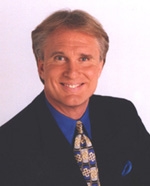
Jack Lannom is an internationally known speaker, author, and consultant. He has served as a corporate coach for several Fortune 500 companies, including Citibank, R&R Donnelly and Sons, Jefferson Pilot Communications, Caterpillar, and also Knight-Ridder Newspapers and is featured on the PBS television program, "Lannom Memory Methods".
Jack is the author of Untapped Potential, Transformational Coaching, Quantum Mind, Memory Genius, The Self-Concept Game, The Leaders Leader, You Are A Genius Children's Interactive Software, Lannom's Memory Methods, People First, and The Dynamics of Remembering Names and Faces.
He's also a talented athlete who holds black belts in six different styles of Kung Fu, including a tenth degree black sash in Wa Lu. And Jack holds the world record for breaking a 3,150-pound block of ice with a single blow from his hand!
To learn more about Jack Lannom, visit his website here: JackLannom.com where you can sign up for his free newsletter, learn more about his products and read the next 25 pages of People First.
The readable text follows the preserved original publication. The original PDF remains available alongside it.