article · March 2008
The Leader's Leader - SERVANT LEADERSHIP
This sharply vertical organizational structure creates tension, because those "little people" who toil at the bottom of the corporate food chain are relegated to the status of pusillanimous performance puppets.
In our discussion of the Authority success strategy, I spoke of the deleterious effects of a leader who abuses his positional power by adopting a high-command, high-control leadership style. Let us follow this line of thought a little further.
The Leader’s Leader understands that any child can resort to yelling and other intimidating behavior in order to impose her will on others. It takes no special talent and absolutely no discipline to “manage” that way. In an organization bludgeoned by the baseball bat rather than bolstered by the baton, some people are viewed as “superiors,” and others are considered to be “subordinates.”
This sharply vertical organizational structure creates tension, because those “little people” who toil at the bottom of the corporate food chain are relegated to the status of pusillanimous performance puppets.
They cannot—will not—perform as passionate purpose partners because they have not been granted authority to do so!
On the other hand, an organization with a flatter, horizontal structure is a company that is characterized by every individual knowing, embodying, and being stewards of the logos. This kind of philosophical empowerment grants authority to everyone in the organization and strikes a deathblow into paternalism—the old-fashioned, hierarchical, subordinate/superior mentality. There are no big “I’s” and little “you’s” in this kind of environment; there are only big people in big places.
There is still subordination to the leadership, but it is a FUNCTIONAL subordination, not a subordination of the human spirit.
The leaders in this kind of powerful, purpose-filled organization are there primarily to engage, educate, and empower their purpose partners.
A perfect microcosm of such an environment is found in a well-ordered family structure. The children are functionally subordinate to the parents, and the parents bear greater decision-making responsibility, but there is no philosophical subordination. Each family member is equally valuable to the overall structure; everyone has equal dignity and worth. The contributions of the youngest child are recognized as valuable and significant. Similarly, in a healthy, horizontal corporate structure, the contributions of each member are considered to have tremendous value, because each task is an outliving of the in-living philosophy—the logos— of the organization.
As one best-selling writing team has said, in such an environment “All people are the same; only what they do is different.”1
Are there times when Leader’s Leaders are tempted to “pull rank,” and accomplish their purposes through the exercise of their positional power? Of course! Every leader recognizes that it takes discipline to disdain the older, easier path of high-command and high-control and remain on the high road, maintaining a consistent example of the logos.
It requires great discipline for leaders to maintain the proper authority, because their positional power makes them naturally intimidating to others.
Most people are a little fearful when they’re around a leader, because they have received many bitter messages from previous “superiors” that they are expected to think and to behave in an inferior, subordinate mind set. The rigidly autocratic leader wants people to feel small. The despot’s greatest fear is losing the control that is associated with his positional power; thus, his greatest tools for maintaining that control and keeping subordinates “in line” are fear and intimidation.
It takes true humility and discipline for the Leader’s Leader to consistently strive to make other people powerful, rather than to crush their spirits.
Leaders earn trust and respect from the staff—and the power that is bestowed by that respect—because of their knowledge and their living 1 Kouzes and Posner, p. 6.
example of the logos. They do not operate from a prideful platform of power and ego, but rather from the basis of the utmost humility. They serve those they lead.
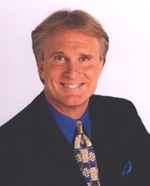
Jack Lannom is an internationally known speaker, author, and consultant. He has served as a corporate coach for several Fortune 500 companies, including Citibank, R&R Donnelly and Sons, Jefferson Pilot Communications, Caterpillar, and also Knight-Ridder Newspapers and is featured on the PBS television program, "Lannom Memory Methods".
Jack is the author of Untapped Potential, Transformational Coaching, Quantum Mind, Memory Genius, The Self-Concept Game, The Leaders Leader, You Are A Genius Children's Interactive Software, Lannom's Memory Methods, People First, and The Dynamics of Remembering Names and Faces.
He's also a talented athlete who holds black belts in six different styles of Kung Fu, including a tenth degree black sash in Wa Lu. And Jack holds the world record for breaking a 3,150-pound block of ice with a single blow from his hand!
To learn more about Jack Lannom, visit his website here: JackLannom.com where you can sign up for his free newsletter, learn more about his products and read the next 25 pages of People First.
The readable text follows the preserved original publication. The original PDF remains available alongside it.